
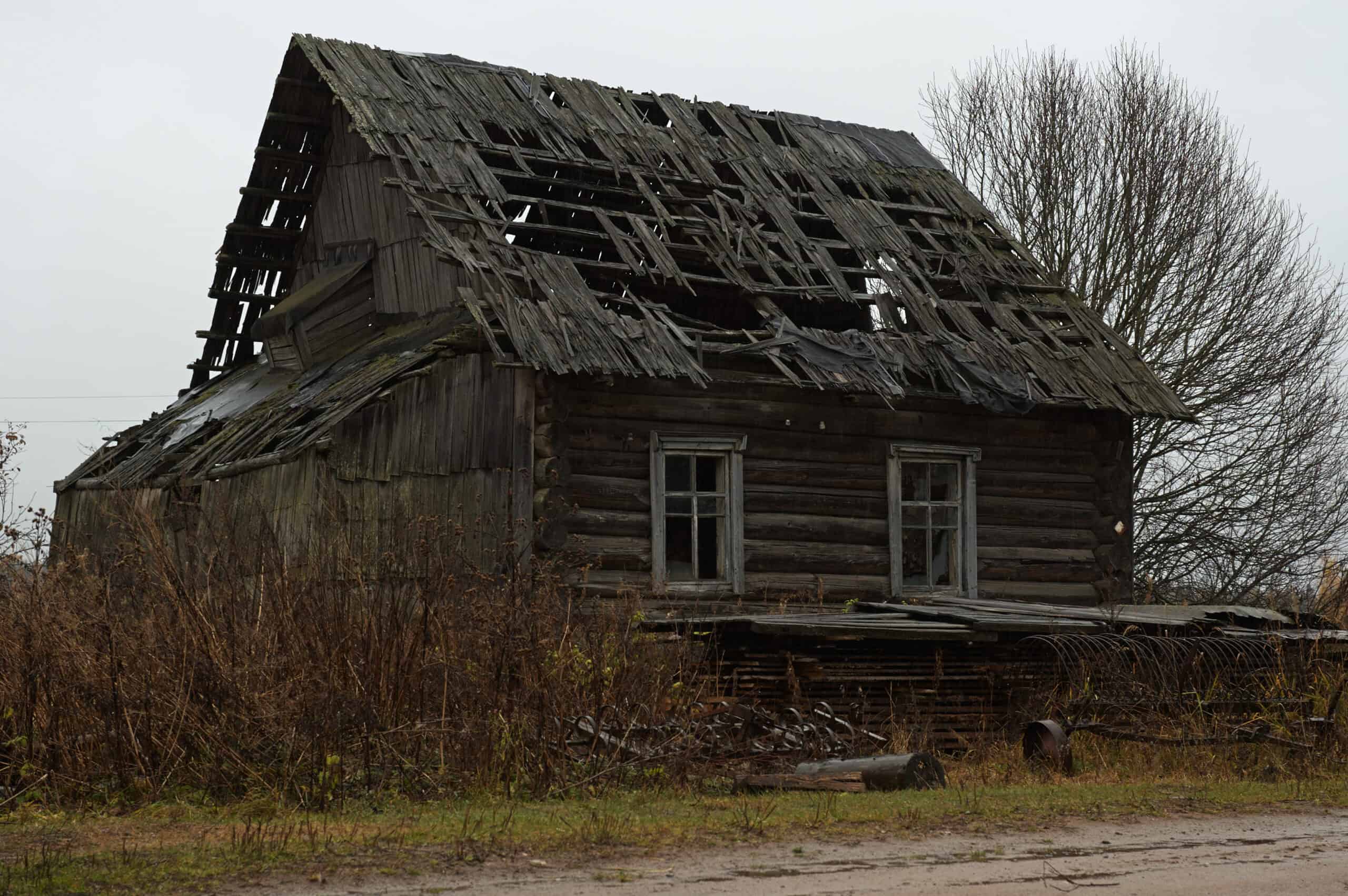
An abandoned village is more than just crumbling walls and overgrown streets. It’s a place where time stopped , sometimes violently, sometimes mysteriously. Across the world, thousands of settlements sit empty, their silence broken only by wind and, some say, by something far more unsettling. These are places where entire communities vanished, leaving behind locked doors, half-eaten meals, and questions that nobody can fully answer. What drove people away? And what, or who, stayed behind?
The Abandoned Village That Radiation Built: Chernobyl’s Ghost Zone
Few stories are as chilling as the one that unfolded in Belarus after April 1986. When the Chernobyl reactor exploded, it didn’t just destroy a power plant. It swallowed entire communities whole.
By 1988, the Belarusian government created the Polesie State Radioecological Reserve. The zone covered 1,313 square kilometers. Inside it, 96 settlements sat completely empty. Twenty-two thousand people had lived there. Then, almost overnight, they were gone.
Villages like Aravichy and Dzernavichy became frozen in time. Residents left in a panic. They left behind furniture, photographs, children’s toys, and pets. Some left food still on the table. The evacuation was so sudden that people couldn’t take everything they loved.
The Polesie State Radioecological Reserve has since expanded by another 849 square kilometers. Today, the zone is one of the most haunting places on Earth. Nature has reclaimed much of it. Trees push through floorboards. Moss covers old Soviet murals. Wolves and wild boar roam streets where children once played.
But some visitors report something stranger. Former residents who sneak back describe an eerie feeling. A sense of being watched. Sounds that don’t belong to any animal. Locals call it the weight of the dead. Whether that’s grief or something paranormal, nobody can say for certain.
The Abandoned Village Frozen by War: Nagorno-Karabakh’s Empty Settlements
This event shares similarities with: Poveglia Island: Italy’s Most Haunted Island Where Screams Still Echo
War creates ghost towns faster than any plague. Between 1988 and 1993, the First Nagorno-Karabakh War emptied hundreds of villages in a matter of months.
Around 400,000 ethnic Azeris and Kurds fled the region. Nearly 200 villages inside Armenia were completely abandoned by 1991. On the other side, approximately 300,000 Armenians fled Azerbaijan. Fifty villages in Northern Nagorno-Karabakh were left empty by their Armenian populations.
What’s left behind in these places is heartbreaking. And deeply strange. Some villages show signs of sudden, chaotic departure. Doors left open. Livestock pens abandoned mid-season. Churches damaged or destroyed, their walls still bearing the scorch marks of conflict.
In Nakhichevan, ancient Armenian settlements and churches were reportedly demolished or damaged after the population fled. Some structures that survived centuries of history didn’t survive this conflict. That erasure of culture alongside physical abandonment creates a particular kind of haunting. The buildings that remain feel like they’re grieving.
Travelers who visit these areas describe an oppressive stillness. The kind that makes your skin crawl. It’s not just quiet. It’s the absence of everything that once made a place alive.
Germany’s Abandoned Village Epidemic: The Wüstungen Phenomenon
Germany has a word for it. Wüstung , a deserted settlement. And Germany has hundreds of them.
Before 1350, Germany had roughly 170,000 settlements across its territory. By 1450, nearly 40,000 of those had vanished. That’s an almost unimaginable collapse of human habitation. What caused it? Plague, famine, war, and climate shifts all played their role.
The Black Death alone wiped out entire communities. Survivors fled. Nobody came back. Villages that had existed for centuries simply ceased to be. Over time, forests grew over them. Fields swallowed the foundations. Only the occasional church ruin, like the haunting remains at Dangelsdorf from the 14th century, reminded people that someone once lived there.
Geographer Kurt Scharlau began cataloguing these lost places in the 1930s. He tried to create order from the mystery. He categorized Wüstungen by type , temporary versus permanent, partial versus total abandonment. But even his careful system couldn’t fully explain the human drama behind each empty village.
Historical records from the wartime period show how quickly communities can dissolve under pressure. Germany’s medieval Wüstungen prove that this process is ancient. Archaeologists today still dig through these sites. They find pottery, coins, animal bones, and sometimes things that don’t fit neatly into any historical record. Unexplained burial patterns. Buildings sealed from the inside. Questions without answers.
Local folklore in many German regions fills these gaps with darker explanations. Cursed land. Angry spirits. Places where God turned his back. Whether you believe in the supernatural or not, standing in a Wüstung feels different from standing in any ordinary field.
When Nature Takes Over: The Eerie Reclamation
There’s something deeply unsettling about watching nature erase human existence. It’s slow. It’s relentless. And it raises uncomfortable questions about how fragile civilization really is.
In Argentina, Villa Epecuén offers one of the most dramatic examples. This resort town was once a thriving tourist destination. Then, in 1985, a nearby lake flooded and swallowed it. The town stayed underwater for nearly 25 years. When the water finally receded around 2009, what emerged looked like something from a nightmare. Twisted metal. Bleached bones of animals. Buildings dissolved down to their bare skeletons. Trees stripped white by years of saltwater submersion.
In Cyprus, the situation takes an even darker turn. Some abandoned villages from the island’s ongoing dispute are reportedly landmined. People can’t return even if they want to. The land itself has become hostile. Dangerous. Forbidden.
In Hong Kong, remote villages in the New Territories emptied out as residents moved to cities for better opportunities. These places sit tucked in valleys and on islands, slowly being consumed by jungle. Some locals refuse to visit them after dark. Stories circulate about sounds, lights, and figures seen where no living person should be.
The pattern is always the same. People leave. Nature moves in. And something else , something harder to name , seems to move in too.
The world’s lost settlements remind us that no community is permanent. Every abandoned village was once full of laughter, arguments, cooking smells, and children running through streets. That life is gone now. What remains is silence, ruins, and the persistent feeling that the past never fully lets go.