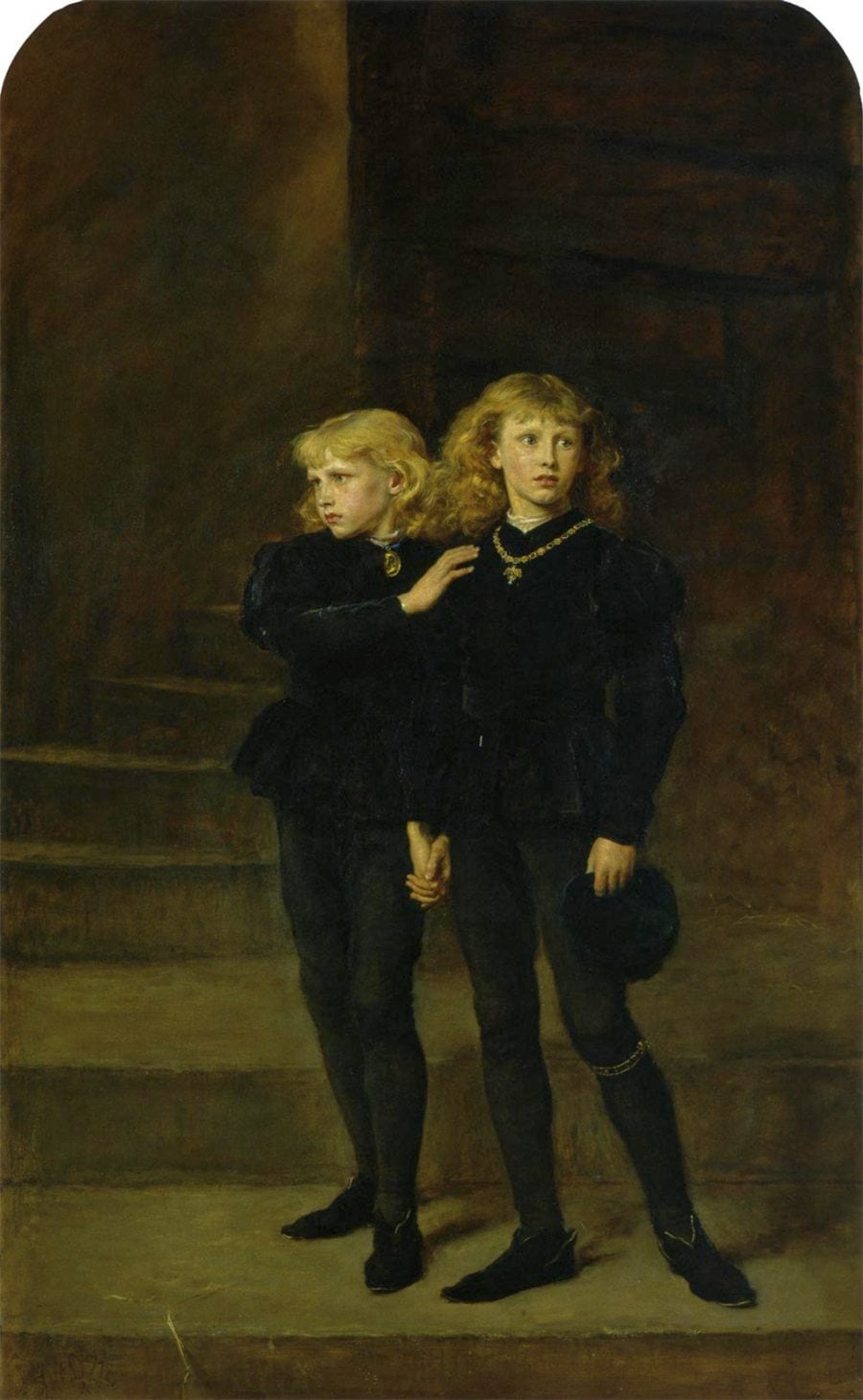
The Princes in the Tower is one of history’s darkest unsolved crimes. Two young boys , an English king and his little brother , walked into the Tower of London in 1483. They were never seen again. No bodies were ever confirmed. No killer was ever charged. Just silence, suspicion, and centuries of unanswered questions that still send a chill down the spine.
Edward V was just 12 years old. His brother Richard, Duke of York, was only 9. Their father, King Edward IV, had just died unexpectedly. Their uncle, Richard Duke of Gloucester, stepped in as Lord Protector. He promised to prepare young Edward for his coronation. Instead, he locked him in a tower.
What happened next is the stuff of nightmares.
How the Princes in the Tower Were Trapped
The boys didn’t end up in the Tower by accident. It was a calculated move. Richard of Gloucester was playing a very dangerous game , and the boys were his pawns.
When Edward IV died in April 1483, young Edward V was at Ludlow Castle. His uncle Richard was far away in Yorkshire. They met at Stony Stratford on April 29th. The very next morning, Richard arrested the boys’ uncle Anthony Woodville and their half-brother Sir Richard Grey. Both men were later beheaded at Pontefract Castle on June 25th.
The boys’ mother, Queen Elizabeth Woodville, saw the writing on the wall. She fled with her daughters into sanctuary at Westminster Abbey. She tried to keep her younger son Richard safe with her. But on June 16th, Richard of Gloucester pressured her to hand over the younger prince. She had little real choice.
Both boys were now inside the Tower of London. Contemporary accounts confirm they were seen playing in the Tower grounds in early summer 1483. After that? Nothing. The sightings stopped. The boys simply vanished from the historical record.
On June 22nd, a sermon at St Paul’s Cross declared Gloucester the only true heir of York. Three days later, lords petitioned him to take the throne. On July 6th, 1483, he was crowned King Richard III. The two young princes were declared illegitimate and forgotten , at least officially.
The Princes in the Tower and the Suspects Behind Their Deaths
Related article: Hessdalen Lights: Norway’s Unexplained Aerial Mystery That Defies Science
So who killed them? That question has sparked fierce debate for over five centuries.
The most popular suspect is Richard III himself. He had the most to gain. With the boys dead, no one could challenge his claim to the throne. The Tudor historian Sir Thomas More wrote a damning account blaming Richard. He claimed Richard ordered his loyal servant Sir James Tyrrell to smother the boys with pillows while they slept. It’s a horrifying image. But More wrote it decades after the fact, under a Tudor king who had every reason to blacken Richard’s name.
The second major suspect is Henry Stafford, the Duke of Buckingham. He was Richard’s closest ally in 1483. He had direct access to the Tower. And he later turned against Richard in a failed rebellion. Some historians believe Buckingham acted alone , perhaps hoping to clear the path for his own ambitions.
Then there’s Henry Tudor himself. He became King Henry VII in 1485 after defeating Richard at Bosworth. If the boys were still alive at that point, they were a serious threat to his crown. Henry had both the motive and the opportunity to finish what Richard may have started.
Lady Margaret Beaufort, Henry’s ruthless and deeply ambitious mother, has also been named. She was a master political operator. Don’t underestimate her.
The uncomfortable truth? We simply don’t know.
The Bones Beneath the Staircase: Princes in the Tower Evidence
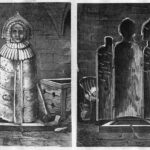
In 1674, workmen at the Tower of London made a grim discovery. While demolishing a staircase, they found a wooden box buried beneath the stones. Inside were two small human skeletons.
The bones were immediately assumed to be those of the murdered princes. King Charles II ordered them reburied with full honors at Westminster Abbey, where they remain to this day. It felt like the case was closed.
But it wasn’t.
The bones were examined in 1933. Experts at the time concluded the skeletons matched the approximate ages of the two princes. But the science was limited. No DNA testing was done. No definitive identification was ever made. The British Museum holds artifacts connected to the Tower’s dark history, but the bones themselves remain locked away in Westminster Abbey’s urn , unexamined by modern forensics.
Requests to conduct modern DNA testing have been repeatedly denied by the Church of England. Why? That’s a question that frustrates historians and conspiracy theorists alike.
The refusal to test the bones is strange. It keeps the mystery alive. Some people think that’s intentional.
Pretenders, Ghosts, and the Mystery That Won’t Die
The story didn’t end with two small skeletons under a staircase. It got stranger.
In 1487, a boy named Lambert Simnel claimed to be Prince Richard. He was crowned “King Edward VI” in Dublin. He later changed his story. Then came Perkin Warbeck in 1491. He claimed to be the younger prince, Richard of York, having escaped to Flanders. Incredibly, he gained serious political support. Even Margaret, Duchess of Burgundy , the princes’ own aunt , backed his claim. Warbeck maintained his identity for six years before his capture in 1497.
Were these men frauds? Almost certainly. But their stories fed a desperate hope. Maybe the boys had escaped. Maybe someone had smuggled them out. Maybe they lived quiet lives somewhere, unable to reveal who they truly were.
The Tower of London itself has never shaken the story. Guards and visitors over the centuries have reported seeing two small figures in white, wandering the cold stone corridors. The apparitions are always described the same way , two young boys, holding hands, looking lost. Whether you believe in ghosts or not, it’s an image that’s hard to forget.
The Princes in the Tower remain one of history’s most haunting cold cases. Two children vanished. A throne was stolen. And somewhere beneath Westminster Abbey, two small sets of bones may hold the answer , if anyone ever dares to look. Historical records from 1933 document the controversial bone examination that raised more questions than it answered.
Five hundred years later, nobody truly knows what happened inside those cold stone walls. And that uncertainty is perhaps the most chilling part of all.