Aviation accidents and incidents have terrified humanity since the very first powered flight. We conquered the skies, but the skies fought back. Some crashes are explained by cold, mechanical logic. Others leave investigators , and survivors , with questions that never get answered. The 1977 Tenerife airport disaster stands as the deadliest single aviation event in history. Two Boeing 747s collided on a fog-drenched runway. 583 people died. But Tenerife wasn’t just a tragedy. It was a collision wrapped in eerie coincidence, strange warnings, and decisions that haunt aviation historians to this day. What really happened in that thick, blinding fog? And why do some aviation disasters feel less like accidents and more like something darker?
Aviation Accidents and Incidents: The Tenerife Disaster’s Deadly Fog
March 27, 1977. Los Rodeos Airport on Tenerife’s northern coast. Two of the world’s largest commercial aircraft sat waiting on a runway shrouded in fog so thick pilots couldn’t see past their own wingtips.
KLM Flight 4805 and Pan Am Flight 1736 had both been diverted there. A bomb threat at Gran Canaria Airport forced the rerouting. Hundreds of passengers sat frustrated, waiting for clearance to leave.
Then something went terribly wrong.
KLM’s captain, Jacob van Zanten, began his takeoff roll without full clearance. He was one of KLM’s most experienced and celebrated pilots. His face was literally on KLM advertising campaigns. Yet something pushed him to go.
The Pan Am 747 was still on the runway. Hidden in the fog.
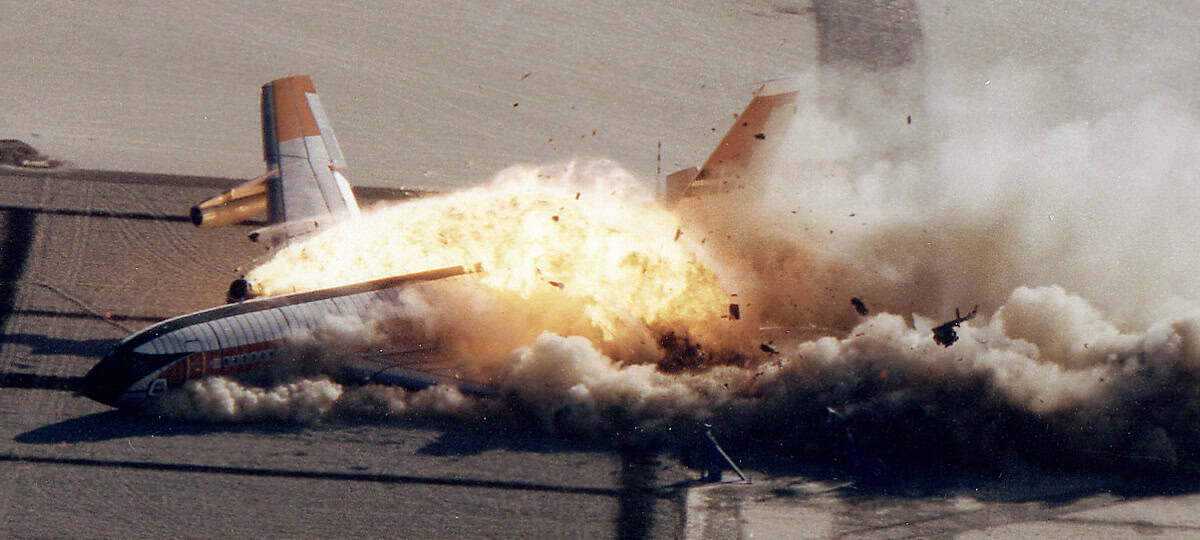
The collision was catastrophic. KLM’s plane struck Pan Am’s at nearly full takeoff speed. The fireball was visible for miles. Of the 644 people aboard both aircraft, only 61 survived. The full horror of the Tenerife disaster is still studied in aviation schools worldwide.
But here’s the part that chills investigators. Van Zanten had reportedly been anxious about crew rest regulations. He didn’t want to delay further. Something , urgency, overconfidence, miscommunication , drove the most experienced pilot in the fleet to make a fatal mistake. Some call it human error. Others call it something harder to explain.
Strange Patterns in Aviation Accidents and Incidents
This event shares similarities with: 2025 Pn7 Quasi Moon: Earth’s Mysterious Shadow Companion That Shouldn’t Exist
Tenerife wasn’t an isolated horror. Aviation history is riddled with disasters that share eerie, almost impossible patterns.
Japan Airlines Flight 123 crashed in August 1985. It remains the deadliest single-aircraft accident in history. 520 people died when a faulty rear pressure bulkhead caused catastrophic structural failure. The plane flew for 32 minutes after the explosion. Passengers wrote farewell notes to their families. The wreckage was found on Mount Takamagahara , a mountain whose name translates to “Plain of High Heaven” in Japanese mythology. Survivors reported hearing strange sounds in the aircraft before the final descent.
Then there’s the case of United Airlines Flight 191. No , that’s not a typo. There were actually multiple flights numbered 191 that crashed. American Airlines Flight 191 in 1979 killed 273 people. Delta Air Lines Flight 191 crashed in 1985. The number 191 became so associated with disaster that some airlines quietly retired it.
Coincidence? Investigators say yes. But passengers who’ve noticed the pattern aren’t always so sure.
Historical newspaper archives from the early aviation era show that strange premonitions and unexplained warnings surrounded many early crashes too. Witnesses reported seeing planes behave oddly before disasters. Crew members sometimes described a “feeling” before flights that ended in tragedy.
Aviation Accidents and Incidents That Left No Explanation
Some crashes aren’t just tragic. They’re genuinely unexplained.
Helios Airways Flight 522 is one of the most disturbing. In August 2005, a Boeing 737 flew on autopilot over Greece while everyone aboard was incapacitated. The plane circled for hours. Fighter jets scrambled to intercept it. Through the cockpit window, pilots saw the co-pilot slumped over the controls. Then , a figure moved in the cockpit.
A flight attendant had regained consciousness. He was trying to land the plane. He had no pilot training. The plane crashed into a hillside north of Athens. 121 people died. But the image of that lone figure desperately trying to save a ghost plane haunts everyone who reads the report.
What about Egypt Air Flight 990? It plunged into the Atlantic Ocean in October 1999. The flight recorder captured the co-pilot saying “I rely on God” repeatedly before disabling the autopilot. American investigators called it deliberate. Egyptian authorities rejected that conclusion entirely. The truth was never officially agreed upon. 217 people vanished beneath the waves with no consensus on why.
These aren’t just aviation accidents and incidents. They’re mysteries that expose how little we truly understand about what happens inside a doomed aircraft.
The Eerie Legacy of the Skies
Aviation disasters leave marks that go beyond crash sites and memorial plaques.
The wreckage of Japan Airlines Flight 123 on Mount Takamagahara became a place of pilgrimage. Survivors returned year after year. Some reported hearing sounds in the forest that didn’t belong there. Locals spoke of spirits that lingered on the mountain.
The Tenerife site was rebuilt. The airport was eventually replaced by a modern facility. But pilots who fly into the old coordinates still sometimes report an unshakeable unease.
Investigators, engineers, and psychologists have spent decades trying to make aviation safer. They’ve largely succeeded. Fatal crash rates have dropped dramatically since the terrifying 1970s and 1980s. The lessons learned from Flight 123 alone rewrote international safety standards.
But the unexplained cases remain. The ghost planes. The cursed flight numbers. The premonitions that survivors swear they felt before boarding.
Aviation accidents and incidents remind us of something uncomfortable. Even in our most sophisticated machines, at 35,000 feet, we are still very small. The sky doesn’t always give back what it takes. And sometimes, it doesn’t give back any answers at all.
—
Excerpt check: “Aviation Accidents and Incidents have haunted the skies for over a century. Discover the eeriest crashes, vanishings, and unexplained disasters.” , 143 characters ✓