
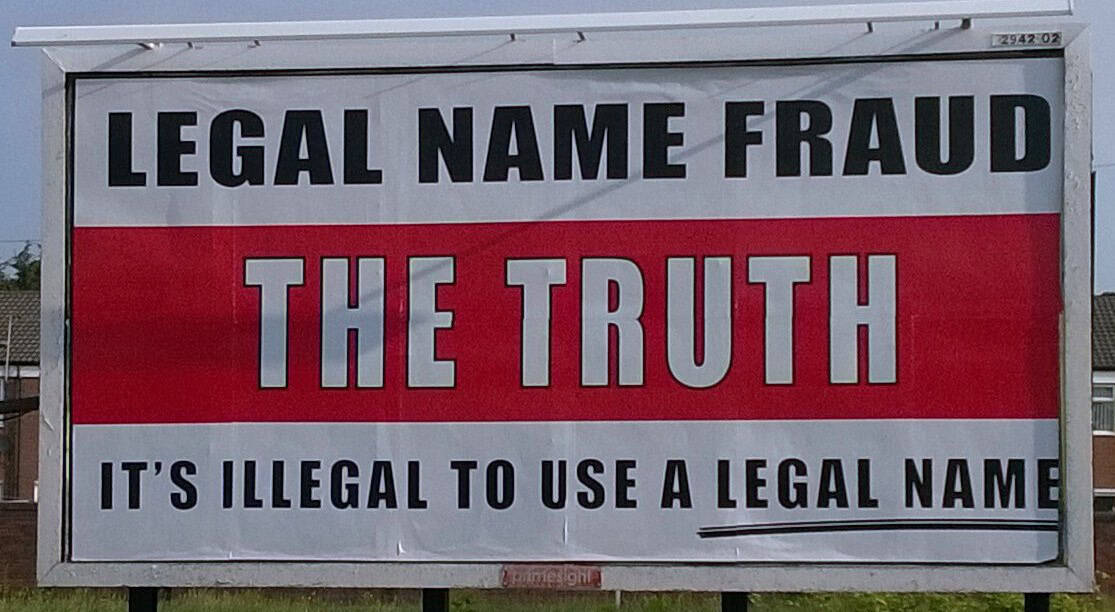
The Freeman on the Land Movement is one of the strangest legal cults of the modern era. Its followers genuinely believe they can declare themselves free from all government authority. They think consent is required before any law can apply to them. They call themselves “freemen.” Courts call their arguments nonsense. And yet, this bizarre belief system has spread across the English-speaking world , and in some cases, it has turned deadly.
This isn’t just harmless eccentricity. Behind the pseudolegal jargon and conspiracy theories lies a rabbit hole of financial scams, violent confrontations, and a worldview so detached from reality that judges have compared it to magic. So how did it start? And why do people keep falling for it?
The Freeman on the Land Movement and Its Twisted Origins
The Freeman on the Land Movement didn’t appear out of nowhere. It grew from the dark roots of the American Sovereign Citizen movement , a radical, anti-government ideology born in the racist fringe politics of 1960s and 1970s America.
The sovereign citizen movement gained momentum during the American farm crisis of the late 1970s and 1980s. Desperate farmers, facing foreclosure and financial ruin, latched onto pseudolegal theories promising escape. The idea was seductive. You could simply declare yourself outside the system. No taxes. No courts. No authority.
These ideas crossed the border into Canada through what became known as the “Detaxer” movement. Canadian “gurus” adapted the theories and repackaged them. By the early 2000s, a distinctly Commonwealth-flavored version had emerged. It called itself the Freeman on the Land movement.
The core belief is almost hypnotic in its simplicity. Freemen claim that statute laws , the laws passed by governments , only apply if you personally consent to them. They believe the only “true” law is their own interpretation of common law. They claim that by filing certain documents, they can legally detach themselves from the state.
Courts have never agreed. Not once. Every single Freeman argument brought before a judge in Canada, Australia, the UK, New Zealand, or Ireland has been rejected. But rejection hasn’t stopped the movement from spreading.
The internet turbocharged everything. Online forums, YouTube videos, and social media allowed believers to connect across continents. By the late 2000s, Freeman ideas had jumped from Canada to the UK and beyond.
The Freeman on the Land Movement’s Most Dangerous Moments
This event shares similarities with: Slenderman Stabbing: When Internet Horror Became Deadly Reality
The movement has always had a dark edge. But nothing illustrated its danger more vividly than the events of August 26, 2025, in Victoria, Australia.
Police officers Neal Thompson and Vadim De Waart-Hottart were killed in a shooting near Porepunkah. They had gone to execute a routine warrant. The alleged shooter was Dezi Bird Freeman , a self-proclaimed sovereign citizen with a long history of anti-police sentiment online.
From at least 2019, Freeman had posted content declaring that “the only good cop is a dead cop.” In a 2024 court appearance, he called police “friggin Nazis” and “terrorist thugs.” His social media was a window into the movement’s most extreme end.
Freeman fled into the dense bushland of Mount Buffalo National Park. What followed was one of the largest manhunts in Australian history. Hundreds of officers, interstate forces, ASIO, and the Australian Defence Force joined the search. A AU$1 million reward , the largest in Victorian history , was offered for information.
The fugitive remained at large for seven months. On March 30, 2026, police fatally shot the individual believed to be Dezi Freeman in the bush.
Marilyn McMahon, Dean of Deakin Law School, called the killings “a tipping point for the movement in Australia.” Academic researchers had long warned about the violence risk. Studies found that Freeman adherents regularly sent disturbing and harassing communications to judges and courthouse officers. Half of subjects studied made “approach behaviors” , a recognized indicator of escalated violence risk.
This wasn’t a fringe concern. This was a documented pattern.
The Freeman on the Land Movement’s Financial Scams
Not all Freeman danger comes at gunpoint. Some of it comes with a £3,000 invoice.
In the UK, a man named Iain Clifford Stamp ran a business called “Matrix Freedom.” He sold a scheme claiming to make clients’ mortgages magically disappear. The method? Freeman on the Land conspiracy theories applied to mortgage law.
Stamp charged clients £3,000 for template legal documents. In its best month in 2022, Matrix Freedom reportedly made £500,000. The High Court threw out every claim. The judge expressed alarm about an “unseen hand” behind the documents , the same unnamed individual appeared to have drafted all the claims, showing what the court called “a near miraculous uniformity of common purpose, style, and prose.”
The UK’s Financial Conduct Authority has since issued warnings about firms pushing Freeman-style mortgage defenses.
Meanwhile, local councils across England are so plagued by Freeman council tax claims that many publish dedicated FAQ pages explaining why the arguments won’t work. One South Yorkshire authority published fifteen separate FAQs addressing Freeman arguments specifically.
The COVID-19 pandemic made things worse. Lockdown restrictions gave the movement a new recruiting tool. Freeman arguments were deployed to challenge mask mandates and vaccine requirements. Researchers noted that vaccine-critical communities and Freeman groups increasingly overlapped during this period.
Francesca Uberti, a post-doctoral researcher at Oxford’s Centre for Socio-Legal Studies, was awarded a British Academy fellowship to study exactly this pipeline. Her research into vaccine-critical groups led her directly into the Freeman world. She found a movement that articulates , however wrongly , real social anxieties about economic and political power.
The Strange Believers Who Think Law Is Optional
What makes someone join this movement? That’s the genuinely unsettling question.
A 2025 study in the Journal of Law and Society challenged the idea that Freeman beliefs are simply irrational. The author argued they reflect deeper conflicts about who gets to define legitimate knowledge. Freeman followers often feel genuinely wronged by the system. Courts, banks, and governments have failed them in real ways.
The movement offers something intoxicating. It says the system is rigged , and that you’ve discovered the secret loophole. You just need to file the right documents. Say the magic words. Declare yourself free.
It never works. Courts reject every argument. Mortgages don’t disappear. Tax bills don’t vanish. And sometimes, as in Victoria in 2025, the confrontation turns fatal.
The Freeman on the Land Movement peaked in Canada during the late 2000s and early 2010s. Its influence there has since declined. But it hasn’t disappeared. It mutates. It finds new recruits through new crises. It promises freedom and delivers chaos.
Perhaps the strangest thing about the movement is this: its followers genuinely believe they’ve found a legal truth that centuries of jurisprudence somehow missed. They think the courts are lying. They think the judges are in on it. They think consent is the master key that unlocks every law.
They’re wrong. But they keep looking for that key. And some of them are willing to do terrible things in the search. You can read more about the broader history of anti-government pseudolegal movements at the Globe and Mail archives, which document decades of Canadian legal fringe movements.
The movement remains active today. Strange, dangerous, and absolutely convinced it has cracked the code of human freedom.
Related Posts
 Gang Stalking: The Dark Web Communities Behind Modern Paranoia and Violence
 Climate Lockdown: The Strange Birth of a Modern Conspiracy Theory
 Id2020: The Digital Identity Conspiracy That Sparked Global Fear and Death Threats
 Great Reset Conspiracy Theories: When Global Recovery Plans Become Sinister Plots