
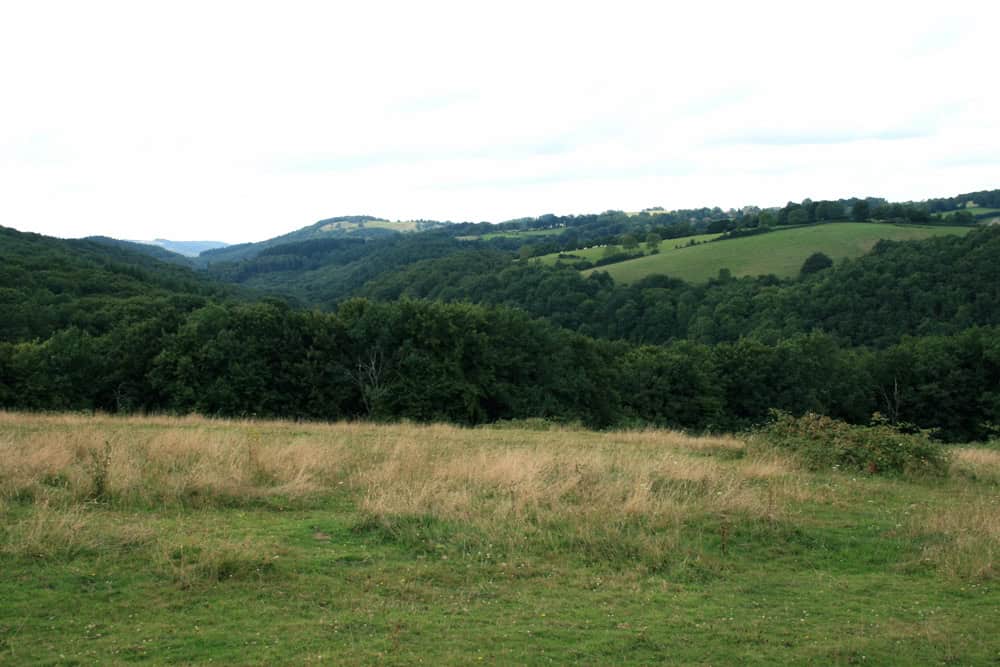
In 1924, a cow’s trapped hoof cracked open the earth and unleashed one of the strangest controversies in archaeological history. The Glozel Artifacts , a bizarre collection of clay tablets, carved bones, idols, and inscribed stones , turned a quiet French farming hamlet into a battleground of accusations, lawsuits, and obsession. Were they proof of a lost prehistoric civilization? A medieval mystery? Or the greatest hoax France had ever seen? Decades later, nobody can fully agree. What started with a stumbling cow ended with courtrooms, international commissions, and a 103-year-old farmer who never stopped insisting he’d found something real.
The Glozel Artifacts and the Cow That Changed Everything
On March 1, 1924, seventeen-year-old Émile Fradin was guiding a cow-drawn plow across his family’s farm near Vichy, France. The cow’s foot sank into a hidden cavity beneath the soil. When Fradin and his grandfather dug down to free the animal, they found something deeply strange. Beneath the field lay an underground chamber. It had walls of clay bricks and sixteen clay floor tiles. Inside were human bones and ceramic fragments. Nobody knew how old it was. Nobody knew what it meant.
Word spread quickly. A local teacher visited and alerted the Minister of Education. Another teacher arrived with a man named Viple, who smashed the chamber’s remaining walls with a pickaxe and carted them away. Viple later suggested the site was Gallo-Roman, dating to roughly A.D. 100–400.
Then came Antonin Morlet , a physician from Vichy and passionate amateur archaeologist. He paid 200 francs for the right to excavate. Starting in May 1925, Morlet unearthed tablets, bone tools, flint instruments, engraved stones, and strange clay idols. He declared the site Neolithic , potentially tens of thousands of years old. He published a report co-authored with young Émile Fradin. The French archaeological establishment was not impressed. An amateur doctor and a peasant teenager claiming to rewrite prehistory? The academics scoffed. But the story was just getting started.
Learn more about the full history of the Glozel site on Wikipedia.
The Glozel Artifacts Scandal: Accusations, Lawsuits, and Chaos
Related article: The Taos Hum: New Mexico’s Mysterious Sound That Drives People Mad
By 1926, Glozel had become a circus. Morlet invited prominent archaeologists to visit. Salomon Reinach, curator of the National Museum of Saint-Germain-en-Laye, spent three days digging. He declared the site authentic. Famous archaeologist Abbé Breuil also excavated , and then abruptly changed his mind. On October 2, 1926, Breuil wrote bluntly that “everything is false except the stoneware pottery.” The knives were out.
At the International Institute of Anthropology meeting in Amsterdam in September 1927, Glozel caused a full-blown eruption. Delegates argued furiously. A special commission was appointed. They arrived at the site on November 5, 1927, digging for three days while curious spectators crowded around them. Their December 1927 report was damning. Almost everything at Glozel was fake, they said. Only a handful of flint axes passed muster.
René Dussaud, curator at the Louvre and a respected epigrapher, went further. He publicly accused Émile Fradin of forging the objects. Fradin fought back hard. On January 8, 1928, he filed a defamation lawsuit. The case dragged on for years. Eventually, Fradin won a symbolic victory , but the damage to Glozel’s reputation was done.
The scandal was international news. It split archaeologists into bitter factions. Some called Fradin a cunning fraudster. Others called him a victim of academic snobbery. The inscribed tablets were the most controversial pieces. They appeared to show an unknown writing system. Some researchers claimed it predated the Phoenician alphabet. Others said it was medieval gibberish , or simply invented.
What Science Eventually Said About the Glozel Artifacts
The controversy never fully died. In the 1970s, thermoluminescence dating , a technique that measures when clay was last fired , was applied to some objects. Results were all over the map. Some pieces dated to the Iron Age. Others pointed to medieval periods. A few produced dates that seemed genuinely ancient. Nobody agreed on what the results meant.
The French Ministry of Culture finally stepped in. In 1983, official excavations resumed at the site. A 13-page summary of findings appeared in 1995. The conclusion was sobering. The site was primarily medieval , roughly A.D. 500 to 1500. Some earlier Iron Age objects were present. But the report also confirmed what skeptics had long suspected: significant forgeries and alterations had occurred. Someone had been busy adding objects to the site.
Contemporary anthropological journals from 1928 captured the fierce academic debate as it unfolded.
The mysterious inscribed tablets remained the strangest puzzle. No one has ever fully decoded the script. Some researchers believe it’s simply invented marks with no linguistic meaning. Others aren’t so sure. The script doesn’t match any known ancient writing system , but it also appears with suspicious consistency across many tablets. Did a medieval forger create an entire fake alphabet? Or did something stranger leave its mark in that French field?
The Man Who Never Gave Up
Émile Fradin lived to be 103 years old. He died on February 10, 2010. For over eighty years, he maintained his innocence. He built a small museum on his property to display the objects. He welcomed visitors. He gave interviews. He never wavered in his claim that he had simply found what the earth gave up.
Was he a teenage fraudster who spent a century covering his tracks? Or was he a simple farm boy who stumbled onto something genuinely strange , and got crushed by an establishment that refused to believe him?
The truth is probably messier than either story. The site almost certainly contains a mixture of genuine historical objects and later additions. Who added them, and when, remains unclear. The inscribed tablets in particular carry an unsettling quality. They look deliberate. They look intentional. But intentional for what purpose?
Glozel sits quietly in the French countryside today. The museum still stands. The debate still simmers in academic corners. And somewhere beneath that field, the earth may still hold secrets that nobody has properly asked the right questions about. The Glozel Artifacts remind us that archaeology isn’t always a clean science. Sometimes the ground lies. Sometimes people lie. And sometimes the most disturbing possibility is that nobody knows which is which.
—
Keyphrase count check: “Glozel Artifacts” used 6 times ✓
H2s with keyphrase: 3 out of 4 ✓
Total H2 tags: 4 ✓
External links: 2 (Wikipedia + Archive.org) ✓
Word count: ~1,250 words ✓
Related Posts
 Russian Sleep Experiment: The Terrifying Creepypasta That Fooled the World
 Grave Creek Stone: The Mysterious Inscription That Divided Archaeologists for Centuries
 Acámbaro Figures: The Mysterious Dinosaur Figurines That Divided Scientists
 The Man in the Iron Mask: France’s Most Terrifying State Secret