
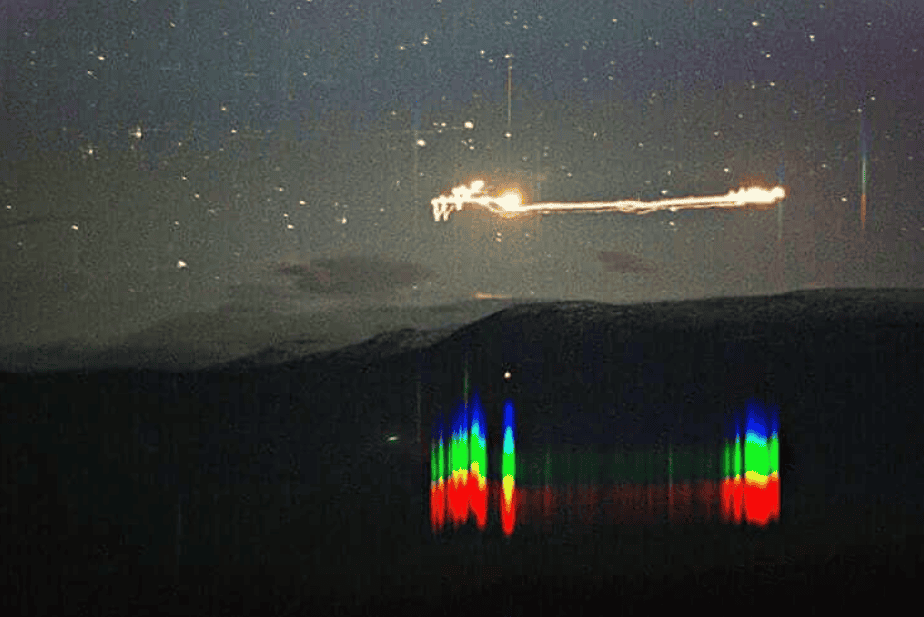
Deep in rural central Norway, something impossible keeps happening. The Hessdalen Lights have been glowing, pulsing, and drifting through a remote mountain valley since at least the 1930s. Witnesses describe brilliant flashes of white, yellow, and red. The lights hover. They dart. They bounce. Sometimes they hold perfectly still in mid-air for over an hour. Scientists have studied them for decades. Cameras have captured them on film. And yet, nobody can fully explain what they are. This isn’t a case of misidentified headlights or swamp gas. The valley of Hessdalen sits in Trøndelag county, stretching roughly 12 kilometers through rugged Scandinavian wilderness. It’s not a place where strange things are supposed to happen. But they do , relentlessly, repeatedly, and on their own schedule. What makes this mystery so deeply unsettling isn’t just what the lights look like. It’s that they seem almost alive.
What the Hessdalen Lights Actually Look Like
Eyewitness accounts paint a genuinely disturbing picture. The lights appear both day and night. Most witnesses describe them as intensely bright , almost painfully so. Colors range from stark white to deep red, with yellow appearing frequently. They don’t behave like any known natural light source.
Sometimes the lights move at enormous speed. Witnesses have watched them streak across the sky in seconds. Other times, they sway slowly back and forth like a lantern hanging in a breeze. On some occasions, they simply stop and hover , floating in complete silence above the valley floor.
The duration varies wildly. Some sightings last only a few seconds. Others stretch well beyond an hour. There’s no predictable pattern to when they appear or how long they stay.
The most chilling recorded incident came in 1997 and 1998. A group calling themselves “The Triangle Project” , made up of students, engineers, and journalists , documented the lights forming a pyramid shape. This glowing geometric form bounced up and down above the valley. A triangle of light. Repeating. Bouncing. In the Norwegian dark.
Wikipedia’s overview of the Hessdalen lights phenomenon documents many of these accounts, including the spike in activity between December 1981 and mid-1984, when locals and tourists reported seeing the lights 15 to 20 times per week. People drove from across Norway just to watch them. Hotels filled up. The valley became a strange kind of pilgrimage site.
Then, just as suddenly, the activity dropped off. By 2010, sightings had fallen to just 10 to 20 per year.
The Science Behind the Hessdalen Lights (And Why It Fails)
For more strange history, see: Seven Gates of Hell: Pennsylvania’s Most Terrifying Urban Legend
Researchers haven’t ignored this mystery. In fact, the scientific response has been unusually serious. Project Hessdalen launched in 1983, organized by UFO-Norge and UFO-Sverige. Field investigations ran through 1985. In 1998, scientists installed the Hessdalen Automatic Measurement Station directly in the valley. It records data continuously. Later, a program called EMBLA brought together researchers from Østfold University College in Norway and the Italian National Research Council.
Despite all of this, there is still no consensus explanation.
Several theories have been proposed. One suggests the lights result from burning airborne dust , a combustion process linked to mining activity in the region. Analysis found hydrogen, oxygen, titanium, and other elements in the area. The Norwegian press famously declared “The Mystery in Hessdalen is Solved” after this research was published. It wasn’t solved.
Another theory involves radon decay. Alpha particles released during radioactive decay could ionize dust and air, creating clusters of glowing plasma. Computer simulations show that dust inside ionized gas can actually organize itself into double helix structures , eerily similar to what some witnesses have described seeing.
In 2004, physicist Massimo Teodorani documented something that should have made headlines worldwide. He measured elevated radioactivity on rocks near the exact spot where a large glowing ball had been reported. The rocks were hot with radiation after the light disappeared.
A third theory points to piezoelectricity. The valley contains enormous deposits of quartz-bearing rock. Under geological stress, quartz produces intense electrical charges. This could theoretically generate visible plasma discharges. It’s a real phenomenon. But it doesn’t fully account for the lights’ behavior , especially the geometric shapes and the hovering.
Hessdalen Lights and the Paranormal Connection
Here’s where it gets truly strange. Some researchers have begun comparing Hessdalen to other so-called “high-strangeness zones” around the world. A 2025 white paper archived at Archive.org explored whether transient luminous phenomena at locations like Hessdalen Valley might share a common origin , not in alien technology or the supernatural, but in environmental electromagnetic conditions that science doesn’t yet fully understand.
Archive.org hosts historical documents and research papers related to unexplained phenomena from around the world, including early UFO investigation reports that mention the Norwegian valley lights.
That comparison matters. Because Hessdalen isn’t unique in having persistent, unexplained lights tied to a specific geographic location. What makes it unique is the density of documentation. Decades of photographs. Radar readings. Spectrographic analysis. Radioactivity measurements. And still , no answer.
Local residents have lived alongside the lights for generations. For them, this isn’t a tourist attraction or a scientific puzzle. It’s just part of life in the valley. Some find comfort in the lights. Others find them deeply unsettling. A few have reportedly refused to go outside at night during active periods.
The lights don’t seem to care either way.
Norway’s Valley of Unanswered Questions
What do you do with a mystery that refuses to be solved? Scientists keep measuring. Tourists keep visiting. The lights keep appearing , on their own schedule, for their own reasons.
The automatic measurement station still sits in the valley. It still records data. Researchers still publish papers. And the theories keep multiplying: plasma clusters, radon ionization, piezoelectric discharge, electromagnetic anomalies, combusting mining dust. Each one explains part of what’s been observed. None explains all of it.
The bouncing triangle of light from 1997 doesn’t fit neatly into any of these frameworks. Neither does the radioactive rock. Neither does the fact that the lights sometimes appear to respond , changing direction, speeding up, slowing down , almost as if they’re aware of being watched.
Norway’s Hessdalen valley sits quietly in the mountains. Twelve kilometers long. Sparsely populated. Unremarkable on any map. But something has been lighting up that valley for nearly a century, and it hasn’t stopped. Whatever the Hessdalen Lights truly are, they remain one of the most thoroughly documented and least understood phenomena on Earth. The instruments keep running. The data keeps piling up. And the lights keep glowing in the dark.
Related Posts
 Crying Boy Paintings: The Cursed Artwork That Survived Deadly House Fires
 Himalayan Fossil Hoax: The Greatest Paleontological Fraud That Fooled Science for Decades
 Flight with Disabled Controls: When Pilots Cheated Death with No Way to Steer
 The Choking Doberman: America’s Most Terrifying Urban Legend Explained