The Lead Books of Sacromonte are one of history’s most audacious religious forgeries. Discovered in the caves of a Spanish hillside between 1595 and 1606, these strange circular lead plates claimed to carry divine messages from the Virgin Mary herself. They fooled bishops, sparked fierce theological debate, and divided scholars across Europe for decades. And buried within their cryptic text was a message so politically charged, so perfectly timed, that many believe the whole affair was something far darker than a simple hoax. This is the story of fake martyrs, burned bones, and a conspiracy that reached all the way to Rome.
The Lead Books of Sacromonte: What Was Found in the Caves
The caves of Sacromonte sit on a dramatic hillside just outside Granada, Spain. In 1595, workers made a shocking discovery inside those caves. They unearthed burned human remains alongside strange circular plates made of lead. The plates were inscribed with mysterious characters. They were laced together with lead wire and bound in folded lead covers. In total, 22 volumes were found, though three have since disappeared entirely.
The burned bones weren’t just anonymous remains. Lead plaques identified them as the body of Saint Caecilius of Elvira and eleven followers. According to these plaques, they had been martyred under the Emperor Nero himself. It was a sensational claim. Granada suddenly had its very own ancient martyrs.
The Lead Books of Sacromonte were written in a blend of Arabic and Latin. The characters used were ones that Morisco scholars claimed to recognize as “Solomonic” , a pre-Islamic form of Arabic lost to time. This made the texts almost impossible to read without specialist help. That detail turned out to be very convenient for the forgers.
The Catholic authorities were completely dependent on Morisco translators. Two men stepped forward. Miguel de Luna and Alonso del Castillo lived conveniently nearby in the Albaicin district. They had also been involved in finding some of the books in the first place. That fact alone should have raised alarm bells. It didn’t.
The Hidden Message Inside the Lead Books of Sacromonte
Another fascinating historical case is: 2012 Phenomenon: When Ancient Maya Calendars Sparked Global Doomsday Panic
Once translated, the texts made extraordinary claims. The Virgin Mary herself had delivered prophetic teachings. She addressed them primarily through Saint Peter. Her message? She loved the Arabic people and the Arabic language. She promised her special guardianship over Granada. She sent Saint James and Saint Caecilius to evangelize Spain , and notably, Saint Paul didn’t appear anywhere in the story.
This was not accidental. The books were written during one of the most brutal periods of Spanish history for its Muslim population. The Moriscos , Muslims forcibly converted to Christianity , faced expulsion and persecution. The Lead Books essentially argued that Arabic was an ancient Christian language. They claimed that the Arabs of Granada were Spain’s first Christians. It was a desperate theological defense of an entire people.
The texts were also carefully crafted to appeal to Catholic sensibilities. They emphasized the veneration of relics. They celebrated the cult of the Virgin. They highlighted Granada’s ancient status as a Christian bishopric. But they quietly downplayed elements of Christianity that Muslims found most difficult. There was no strong emphasis on the Trinity. The incarnation of Jesus was softened. Wine in the Eucharist was barely mentioned.
One passage even used language eerily close to Islamic declaration: “God is One. There is no other God but God, and Jesus is the Spirit of God.” It walked a razor’s edge between two faiths. That was entirely the point.
The Lead Books of Sacromonte Face Rome’s Judgment
Not everyone was convinced. Protestant scholars in the Netherlands spotted the forgery almost immediately. They called the texts a blatant fabrication. But in Catholic Spain, that criticism backfired. Agreeing with Protestant heretics was dangerous. So dissenting voices inside Spain were effectively silenced by association.
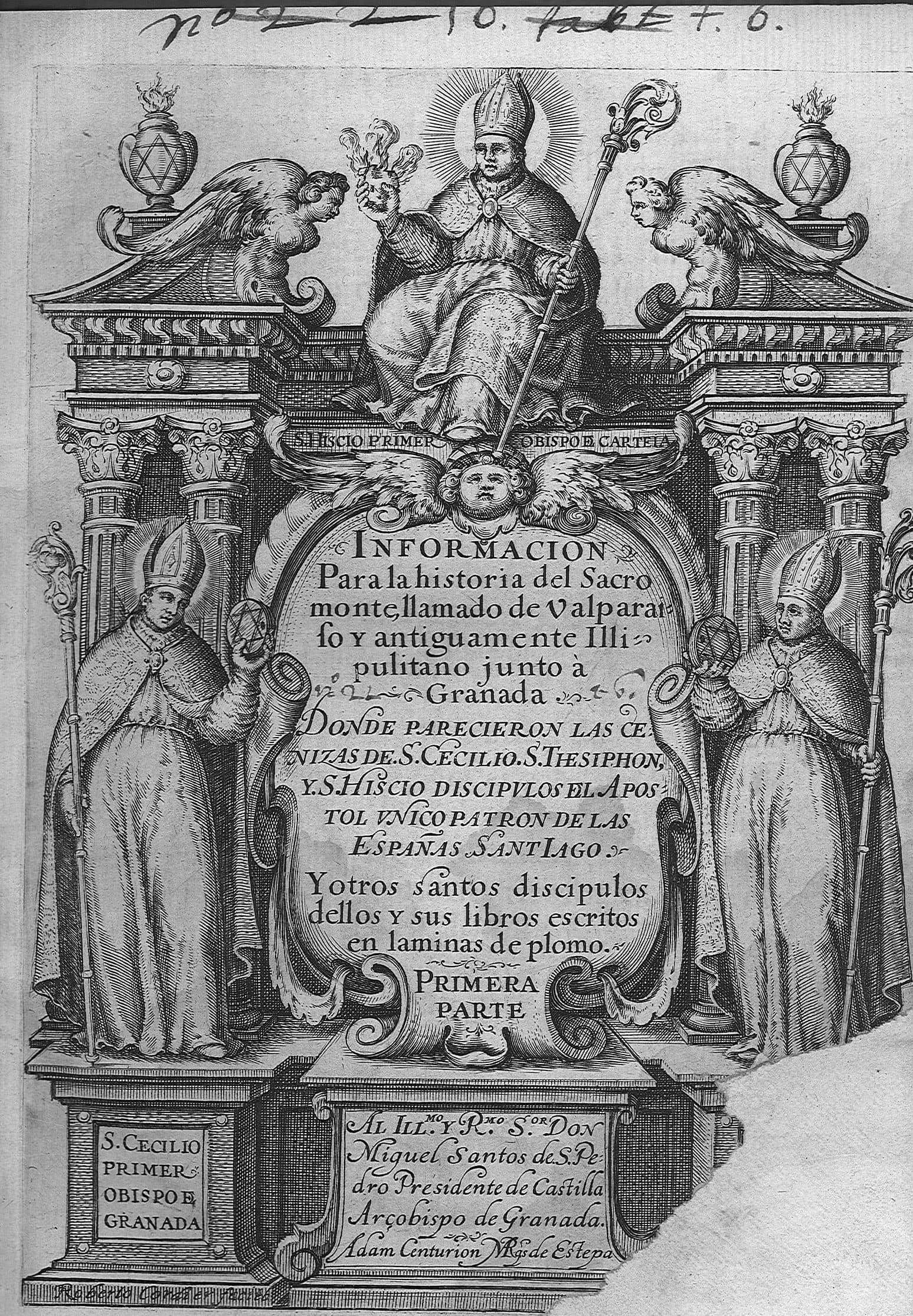
The Vatican, however, was deeply skeptical from the start. Rome refused to be rushed. After decades of investigation, the Vatican finally acted in 1642. The Lead Books were sent to Rome for examination. They took with them an associated ancient parchment found in 1588 inside a lead box in the tower of a former mosque in Granada. That parchment had been the opening act of the whole strange drama.
Lead as a writing material had ancient precedent, which gave the forgeries an initial air of plausibility. But expert examination in Rome was devastating. The books were declared forgeries. They were condemned by Pope Innocent XI in 1682. The Vatican kept the originals locked away for over three centuries.
One book, called the “Libro Mudo” or “Mute Book,” was never deciphered at all. It remains untranslated to this day. Nobody knows what it says. That single detail is perhaps the strangest part of the whole affair.
The Forgers, the Return, and the Mystery That Remains
The translators Miguel de Luna and Alonso del Castillo are widely believed to be the masterminds behind the forgery. Both were educated Moriscos. Both had deep knowledge of Arabic, Latin, and early Christian history. Both had suspicious access to the discovery sites. Luna had even written a fictional history of Arab Spain years earlier, suggesting he had both the skill and the motivation to construct an elaborate false narrative.
The timing was not coincidental. The Moriscos were expelled from Spain entirely in 1609. The Lead Books had been their desperate attempt to rewrite their own history. They tried to make themselves indispensable to Spanish Catholic identity. It almost worked.
The books stayed in Rome for over 300 years. They were finally returned to Granada in 2000 after lengthy negotiations between Spain and the Vatican. They’re now housed in the Abbey of Sacromonte. They’re recognized as extraordinary historical artifacts, even if they’re fake. The caves where they were found remain a pilgrimage site. People still visit the spot where burned bones and forged scripture once convinced an entire city it had found its founding saints.
Contemporary Catholic accounts from the period show just how deeply the discovery shook Granada’s religious establishment. The emotional investment was enormous. When Rome declared the texts fraudulent, it was a humiliation that the city struggled to accept.
The Lead Books of Sacromonte remain one of the most fascinating forgeries in history. They weren’t created for money or personal gain. They were created out of desperation , by a persecuted people trying to survive. Whatever you think of the deception, the story behind it is heartbreaking, strange, and utterly unforgettable.