
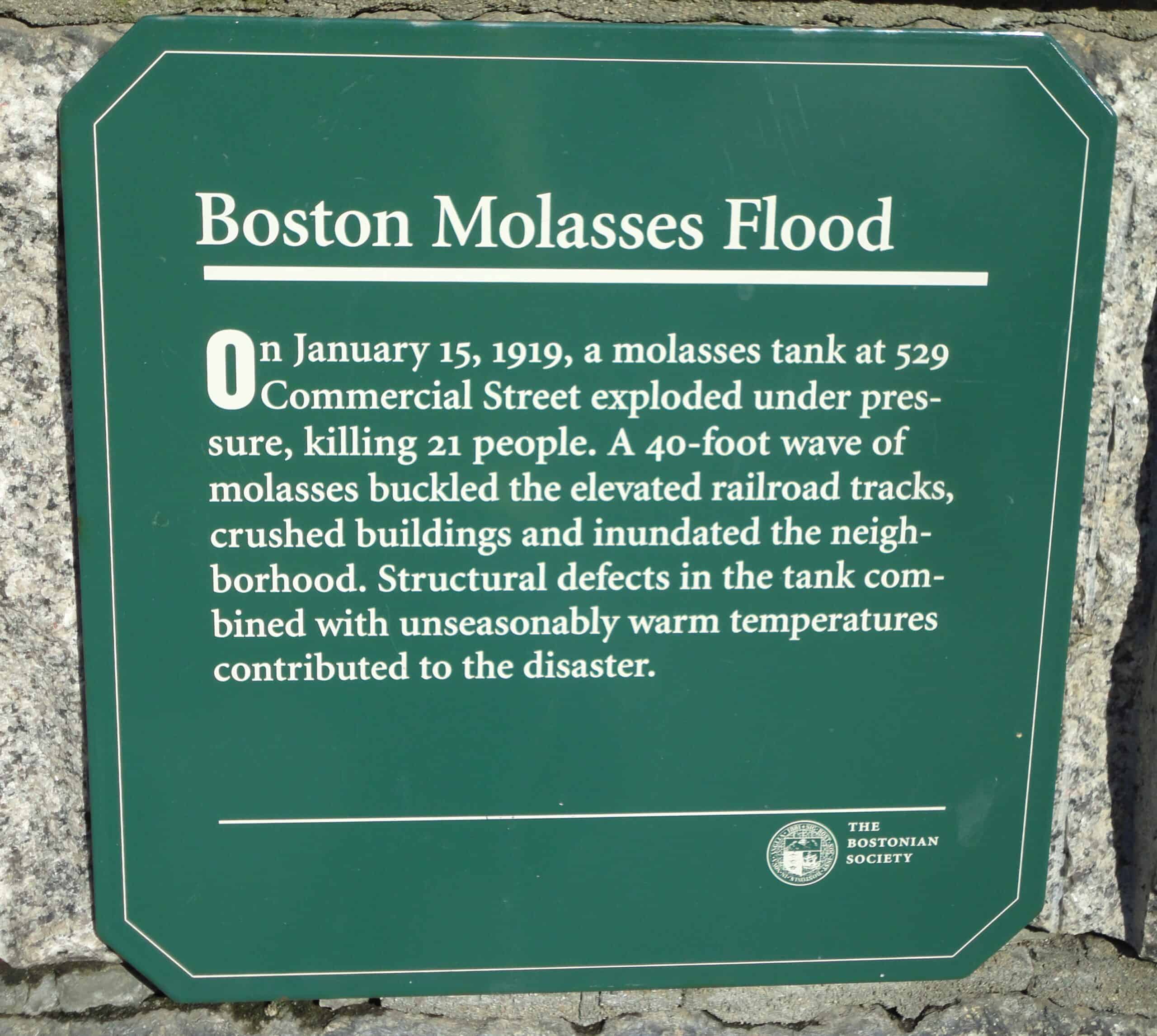
On January 15, 1919, The Great Molasses Flood turned a quiet Boston afternoon into a scene straight out of a nightmare. A massive storage tank holding 2.3 million gallons of molasses exploded without warning. What followed was one of the strangest, deadliest, and most bizarre disasters in American history. The sticky wave moved faster than most people could run. It swallowed horses, crushed buildings, and trapped victims in a suffocating brown tide. Even today, locals claim you can still smell sweetness in the North End on hot summer days. That detail alone should give you chills.
The Great Molasses Flood: What Built the Bomb
The tank at 529 Commercial Street wasn’t just storing a condiment. The Purity Distilling Company used molasses to produce ethanol. Ethanol was a critical ingredient in munitions during World War I. So this wasn’t some innocent syrup depot. It was essentially an industrial pressure cooker sitting in the middle of a crowded neighborhood.
The tank itself was enormous. It stood 50 feet tall and 90 feet wide. It held up to 2.3 million gallons of thick, dark molasses at full capacity. Locals had noticed problems with the tank for years. It leaked so badly that neighborhood children scraped molasses off its sides for a free snack. Workers reportedly painted the tank brown to hide the stains from seeping liquid. That wasn’t maintenance. That was a cover-up.
The day before the disaster, a ship delivered a fresh warm load of molasses. It was pumped directly into the tank alongside the older, colder molasses already inside. January in Boston is brutal. But on January 15th, temperatures climbed rapidly above 40°F after days of freezing cold. That sudden thermal shift may have triggered the catastrophic pressure buildup inside. According to historical records, the tank failed at approximately 12:30 p.m.
The rivets didn’t just fail. They shot out like bullets. Witnesses heard a sound like a machine gun rattling through the streets. Then came the roar.
The Great Molasses Flood’s Wave of Death
Another fascinating historical case is: Soviet evacuation of Tallinn: The Tragic Naval Disaster of August 1941
The wave that erupted from the burst tank was 25 feet high at its peak. It moved at 35 miles per hour. That’s faster than most Olympic sprinters. Molasses is 40% denser than water. It carries enormous energy. It doesn’t just wash over you. It pins you down, fills your lungs, and refuses to let go.
The Boston Post described the scene in haunting terms. “Molasses, waist deep, covered the street and swirled and bubbled about the wreckage,” the paper reported. “Here and there struggled a form , whether it was animal or human being was impossible to tell.” That image is genuinely horrifying. Victims were indistinguishable from animals in the churning brown mass.
Steel panels from the exploded tank slammed into the girders of the elevated railway overhead. A streetcar was tipped momentarily off its tracks. Nearby buildings were swept clean off their foundations. Several city blocks flooded to depths of two to three feet. Horses were trapped and drowned in the sticky tide. Twenty-one people died. One hundred and fifty more were injured.
The cleanup took two weeks. Firefighters used salt water from the harbor to hose down the streets. The molasses turned the harbor brown for months. Workers, rescue crews, and bystanders tracked the sticky substance across the city. It got into subway cars. It coated telephone booths. Boston smelled like a candy factory in hell.
The Strange Aftermath of The Great Molasses Flood
The legal battle that followed was almost as remarkable as the disaster itself. United States Industrial Alcohol, the parent company of Purity Distilling, initially blamed anarchists. It was 1919. The Red Scare was in full swing. Blaming a bomb seemed convenient. But the evidence didn’t support it.
A six-year legal investigation followed. Hundreds of witnesses testified. Engineers examined the wreckage. The conclusion was damning. The tank had been structurally unsound from the beginning. It was never properly tested before being filled. When it was first filled with water for a leak test, workers noticed it leaked significantly. The company’s response was to paint it brown.
Contemporary newspaper coverage from the Boston Post captured the public outrage as evidence mounted against the company. In 1925, a court-appointed auditor found the company liable. Victims and families were eventually compensated. It was one of the earliest cases where a corporation was held accountable for industrial negligence on this scale.
But the truly strange part? The legacy didn’t end with the lawsuits. For decades after the flood, Boston residents swore they could smell molasses on hot summer days in the North End. Some still claim it today. Is it memory? Is it something embedded in the very soil and brick of the neighborhood? Nobody can say for certain. The area has been built over and rebuilt many times. Yet the smell reportedly returns every August.
Why Boston Never Forgot This Sticky Horror
The disaster left marks that go beyond the physical. It changed how America thought about industrial safety. Before 1919, companies could build massive tanks in the middle of crowded neighborhoods with virtually no oversight. After the molasses flood, Massachusetts began requiring engineers to sign off on large construction projects. It was a quiet revolution in building safety born from a very sticky catastrophe.
The human stories are what truly haunt you. A firefighter named George Layhe was killed when the wave hit the firehouse on Commercial Street. He was found pinned beneath the wreckage. His colleagues survived. Passersby who stopped to look were swallowed before they could flee. Children who had just finished lunch were caught in the wave on their way back to school.
The North End in 1919 was a tight-knit immigrant community. Italian families had settled there in large numbers. Many victims were workers, laborers, and ordinary people going about their lunch hour. They never saw it coming. Nobody did. One moment, the street was normal. The next, a brown wall of death was moving at highway speed through their neighborhood.
The Great Molasses Flood remains one of history’s most surreal disasters. It sounds almost funny when you first hear it. A flood of molasses? But dig into the details and the horror becomes very real. Twenty-one people suffocated, drowned, or were crushed by something as mundane as a sweetener. The ground still holds the memory. And on the hottest days of summer, Boston hasn’t entirely forgotten.
Related Posts
 USS Craven (TB-10): The Cursed Torpedo Boat That Met a Fiery End
 The London Beer Flood: The Bizarre 1814 Disaster That Drowned a London Slum in Beer
 The Cottingley Fairies: How Two Girls Fooled the World with Cardboard Cutouts
 White River Monster: Arkansas’s Terrifying River Beast That Got Its Own Sanctuary