
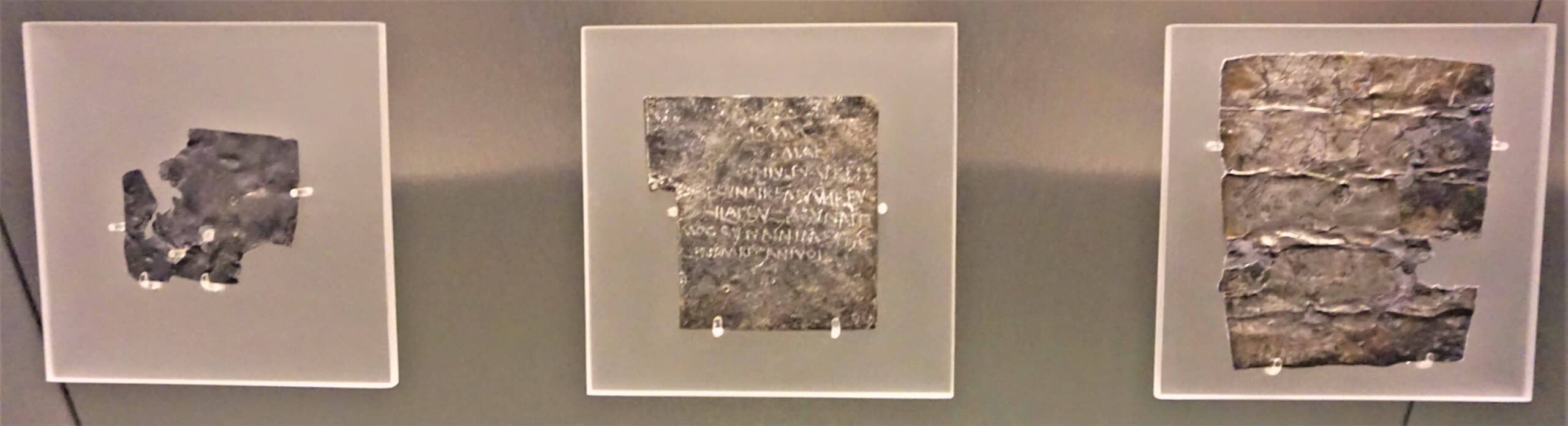
The Bath Curse Tablets are among the most chilling archaeological finds in British history. Discovered beneath the sacred waters of a Roman temple, these small lead sheets carry something far darker than ordinary inscriptions. They are pleas for divine punishment. Curses. Threats whispered to a goddess by people who had been wronged , and who wanted revenge. Over 130 of them were pulled from the mud in Bath, England, and what they revealed about the ancient world is genuinely unsettling. These weren’t grand political declarations. They were the desperate, angry words of ordinary people begging a deity to destroy someone who had stolen their cloak.
What Are the Bath Curse Tablets?
The Bath Curse Tablets were discovered between 1979 and 1980. Archaeologists excavating the Sacred Spring beneath the King’s Bath made the find. The spring sat at the heart of a Roman temple complex dedicated to the goddess Sulis Minerva. She was a hybrid deity , part Celtic water goddess, part Roman Minerva. She was believed to see everything. She was believed to punish everything.
The tablets themselves are small and rectangular. They look almost harmless. Most were made from a lead-tin alloy, thin and flexible as paper. Some were cast under pressure into smooth sheets. Others were hammered roughly from molten lumps. Each one was inscribed with a curse , usually in colloquial Latin, the everyday spoken language of Roman Britain.
The Roman Baths complex where they were found is one of the best-preserved Roman sites in the world. But nothing prepared excavators for what lay beneath the Sacred Spring. Around 130 tablets emerged from the water, many still intact after nearly 2,000 years. Some were fragmentary. Some were blank. And some contained words that would make anyone uncomfortable , specific, furious, detailed curses aimed at named individuals.
Historian Roger Tomlin published the full inscriptions in 1988. The tablets are now on display at the Roman Baths Museum in Bath. But reading them still feels like opening someone’s darkest mail.
The Dark Ritual Behind the Bath Curse Tablets
Another fascinating historical case is: The Great Emu War: When Australia’s Military Lost to Flightless Birds
Creating one of these tablets wasn’t a casual act. It was a ritual. A structured, deliberate process with four specific steps , and each step mattered for the curse to actually work.
First, the curse text had to be drafted carefully. The writer needed to check that the words fit the size of the tablet. Then the tablet itself had to be produced using specialist tools. After that came the inscription , carved or scratched into the metal surface. Finally, the tablet had to be deposited in the correct sacred location. For Sulis Minerva, that meant throwing it into the water of the Sacred Spring.
Here’s where it gets strange. Before the curse could work, the victim had to do something counterintuitive. They had to gift the stolen item to the goddess. By doing this, the theft wasn’t just a crime against them anymore. It became a theft from Sulis herself. And Sulis did not forgive thieves.
The curses weren’t just vague wishes for bad luck. They were specific and visceral. One tablet demands that the thief of a bathing tunic suffer until they bring it to the temple. Others name the suspected thief directly. Some list multiple possible suspects, essentially telling the goddess: “I don’t know which of these people did it , punish them all until the guilty one confesses.”
Some tablets were clearly written by professional scribes. Others show amateur handwriting. A few contain what appears to be illiterate scrawl , repetitive crosses and lines that mimic writing. Even people who couldn’t read or write wanted in on the ritual. They trusted the goddess would understand.
The Stolen Goods and Sinister Prayers of the Bath Curse Tablets
What were people actually cursing over? The answer is surprisingly mundane , and that’s what makes it so human.
Cloaks. Bathing tunics. Gloves. Rings. Coins. The tablets read like ancient lost-and-found notices, except instead of asking nicely, the victims are calling down divine wrath. One inscription demands that the thief of a linen cloth be afflicted in mind, eyes, and every limb. Another curses whoever stole six silver coins. The specificity is remarkable. These weren’t abstract prayers. They were targeted attacks.
Two of the tablets are written in a language that isn’t Latin at all. The letters are Roman, but the words remain undeciphered. Nobody knows what those two tablets say. They might be in an early form of Celtic. They might be in a language that no longer exists. Whatever they contain, someone felt strongly enough to throw them into a sacred spring nearly two millennia ago.
The tablets have been recognised by UNESCO in its Memory of the World UK Register. That’s how significant they are as historical documents. They give us a direct window into the spoken language of Roman Britain , the vulgar, everyday Latin that ordinary people actually used. You can learn more about how ancient curse practices spread across the Roman world through the British Museum’s collection on Roman magic.
The Goddess Who Answered , and the Curses That Still Unsettle Us
Sulis Minerva was no gentle deity. She presided over hot spring waters that bubbled up from underground at a temperature of about 45 degrees Celsius. The Romans believed this heat came from the underworld. They believed the spring was a gateway. When you threw a tablet into those waters, you weren’t just making a wish. You were sending a message directly into the realm of divine power.
The gilt bronze head of Sulis Minerva , found at the temple site , shows a face of cold authority. She doesn’t look merciful. She looks like someone who keeps her promises.
What’s haunting about the Bath Curse Tablets isn’t just their age. It’s their intimacy. Real people stood at the edge of that spring, furious and violated, and threw their anger into the water. They named names. They described their stolen goods in detail. They asked for suffering to be inflicted on another human being. And they believed, completely, that it would work.
Some tablets were folded or rolled up before being thrown in , possibly to keep the curse secret from anyone but the goddess. The ritual had rules. The anger had structure. And the spring swallowed all of it, preserving these dark little prayers for nearly 2,000 years.
Whether Sulis Minerva ever answered is a question archaeology can’t resolve. But the tablets remain , thin sheets of metal carrying ancient rage, pulled from sacred water, and still unsettling to read today.
Related Posts
 Eye of Providence: The All-Seeing Symbol That Has Haunted History for Centuries
 Longyou Caves: China’s 2,000-Year-Old Underground Mystery That Defies Explanation
 The Marzeah Papyrus: The “Oldest Hebrew Manuscript” That Was Almost Certainly a Fake
 Baghdad Battery: The 2,000-Year-Old Mystery That Could Rewrite History