
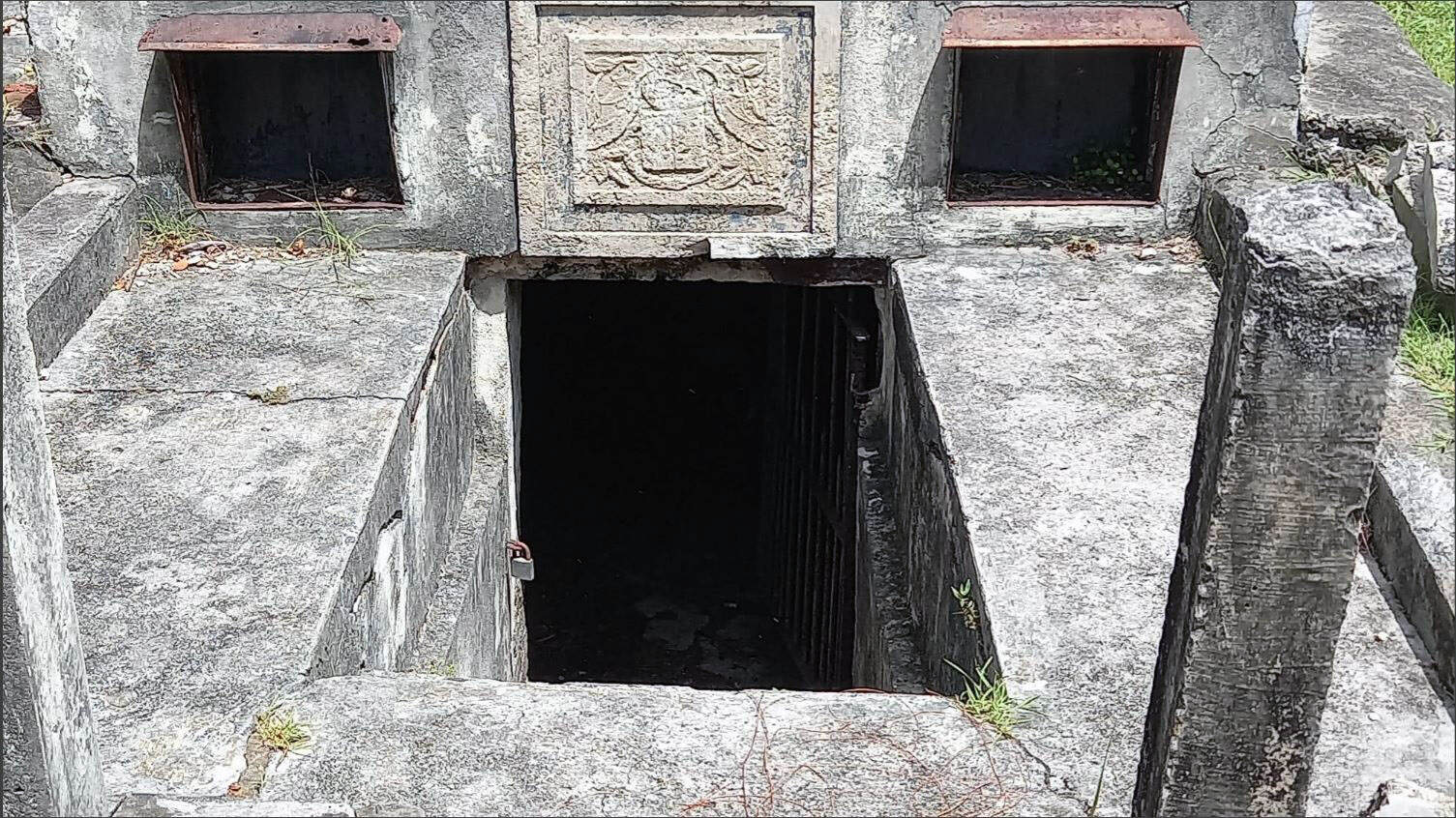
Deep in a Barbados churchyard, the Chase Vault has haunted imaginations for over two centuries. This stone burial chamber sits quietly in the cemetery of Christ Church Parish Church in Oistins. From the outside, it looks like any other old tomb. But according to one of history’s most unsettling legends, something deeply wrong was happening inside. Every time the vault was opened for a new burial, the heavy lead coffins inside had moved. Not slid slightly. Not shifted. Thrown. Overturned. Scattered. Some with their heads pointing down, others tossed against the walls. The stone door required six or seven men to move. The floor was sand , with no footprints. No water damage. No signs of forced entry. Whatever was disturbing those coffins wasn’t leaving any trace behind.
The Chase Vault’s Grim History of Burials
The story begins in 1807. A woman named Mrs. Goddard was the first to be laid to rest in the vault. She was followed in 1808 by two-year-old Ann Maria Chase. Then came her older sister Dorcas in 1812, just twelve years old.
When the vault was opened later that same year to receive the body of their father, Thomas Chase, something was terribly wrong. The girls’ coffins had moved. They were described as being in “a confused state, having been apparently tossed from their places.”
Each subsequent burial brought fresh horror. In 1816, the coffins were disturbed again. Then again in 1819. That final opening was witnessed by no less than the Governor of Barbados himself, Lord Combermere. What he reportedly saw shocked even a man of his authority. The heavy lead coffins , each requiring multiple men to carry , were strewn across the vault floor. Some were upside down. Some were propped at strange angles.
After that 1819 opening, the Governor ordered the bodies removed and reburied in separate plots. The vault has remained empty ever since. Whatever was happening inside those stone walls, the colonial authorities had seen enough.
The sheer weight of the coffins made the mystery even more baffling. Lead-lined caskets of that era were extraordinarily heavy. Moving one would require tremendous physical effort. Moving all of them , and leaving no footprints in the sand floor , seemed impossible.
Who First Told the Chase Vault Story?
This event shares similarities with: Russian Sleep Experiment: The Terrifying Creepypasta That Fooled the World
The first published account appeared in 1833. A man named General James Edward Alexander wrote about it in his book Transatlantic Sketches. But the story didn’t originate with him. According to author Jerome Clark, the tale traces back to Thomas H. Orderson, the Rector of Christ Church during the events in question.
Here’s where things get murky. Orderson gave multiple accounts of the story over the years. Each version contained different details. Scottish folklorist Andrew Lang dug into this in a 1907 article published in the Folk-Lore Journal. He noticed that Orderson’s various tellings didn’t quite match each other.
Lang then did something more damning. He searched the burial register of Christ Church. He checked contemporary Barbados newspapers. He found nothing. No record of the disturbed coffins. No mention of the Governor’s shocking discovery. Nothing to confirm the story had actually happened.
The only “eyewitness” account came from a man named Nathan Lucas, who claimed to have been present at the 1820 opening. But even that account wasn’t written by Lucas himself. It was attributed to him by an unidentified third party. No direct testimony from anyone claiming to have seen the coffins firsthand has ever been confirmed.
Arthur Conan Doyle , creator of Sherlock Holmes , actually commented on the case. He speculated that “animal magnetism” might be responsible for the movements. It’s a strange theory, but it shows how seriously Victorian society took the mystery.
The Chase Vault and the Case Against the Supernatural
Skeptics have taken the story apart piece by piece. Investigator Joe Nickell called the Chase Vault stories “historically dubious.” He pointed out that the tale shares striking similarities with Masonic folklore about secret vaults. Someone familiar with those allegories, he suggested, may have constructed the Barbados legend deliberately.
Benjamin Radford, a folklorist and fellow skeptic, visited the vault in 2019. He examined the interior brickwork carefully. The bricks showed no damage. If heavy lead coffins had truly been thrown around that space repeatedly over more than a decade, you’d expect to see marks. Chips. Cracks. Scratches. There were none.
Alexander’s original 1833 account remains the foundational text for the legend. But Radford and Nickell both noted that each retelling of the story changed key details. Dates shifted. Names changed. The number of coffins varied. This pattern is classic folklore behavior , stories mutate as they spread. Real documented events tend to stay consistent.
Natural explanations have also been proposed over the years. Could flooding have moved the coffins? The sand floor might suggest groundwater. Could earthquakes have rattled them into new positions? Barbados does sit in a seismically active region. But none of these theories fully explain the reported chaos inside , or the lack of any physical evidence of water or tremors.
What Really Happened in That Sealed Stone Chamber?
The truth may be impossible to recover now. The vault sits empty and abandoned. The bodies were moved long ago. The people who claimed to witness the events are centuries dead. And the documentary record , the thing that would confirm or deny everything , simply doesn’t exist.
What we’re left with is a ghost story that refuses to die. It spread through Victorian society like wildfire. It attracted the attention of famous authors and governors alike. It inspired dozens of retellings, each one slightly different from the last.
Was it a hoax? Possibly. Was it a misremembered series of events that grew into legend? Maybe. Was something genuinely unexplained happening inside that sealed stone vault in Barbados? That’s the question that still lingers.
The Chase Vault stands today as a monument to historical ambiguity. It’s a place where the line between legend and reality has completely dissolved. The vault is empty now. The coffins are gone. But the story keeps moving , just like those coffins allegedly did , no matter how many times people try to put it to rest.
Related Posts
 Delhi Purple Sapphire: The Cursed Amethyst That Terrorized Victorian London
 Trans-allegheny Lunatic Asylum: America’s Most Haunted Psychiatric Hospital
 The Brown Hand: Arthur Conan Doyle’s Haunting Tale of Colonial Guilt and Supernatural Justice
 Busby’s Stoop Chair: The Cursed Seat That Kills Everyone Who Sits In It