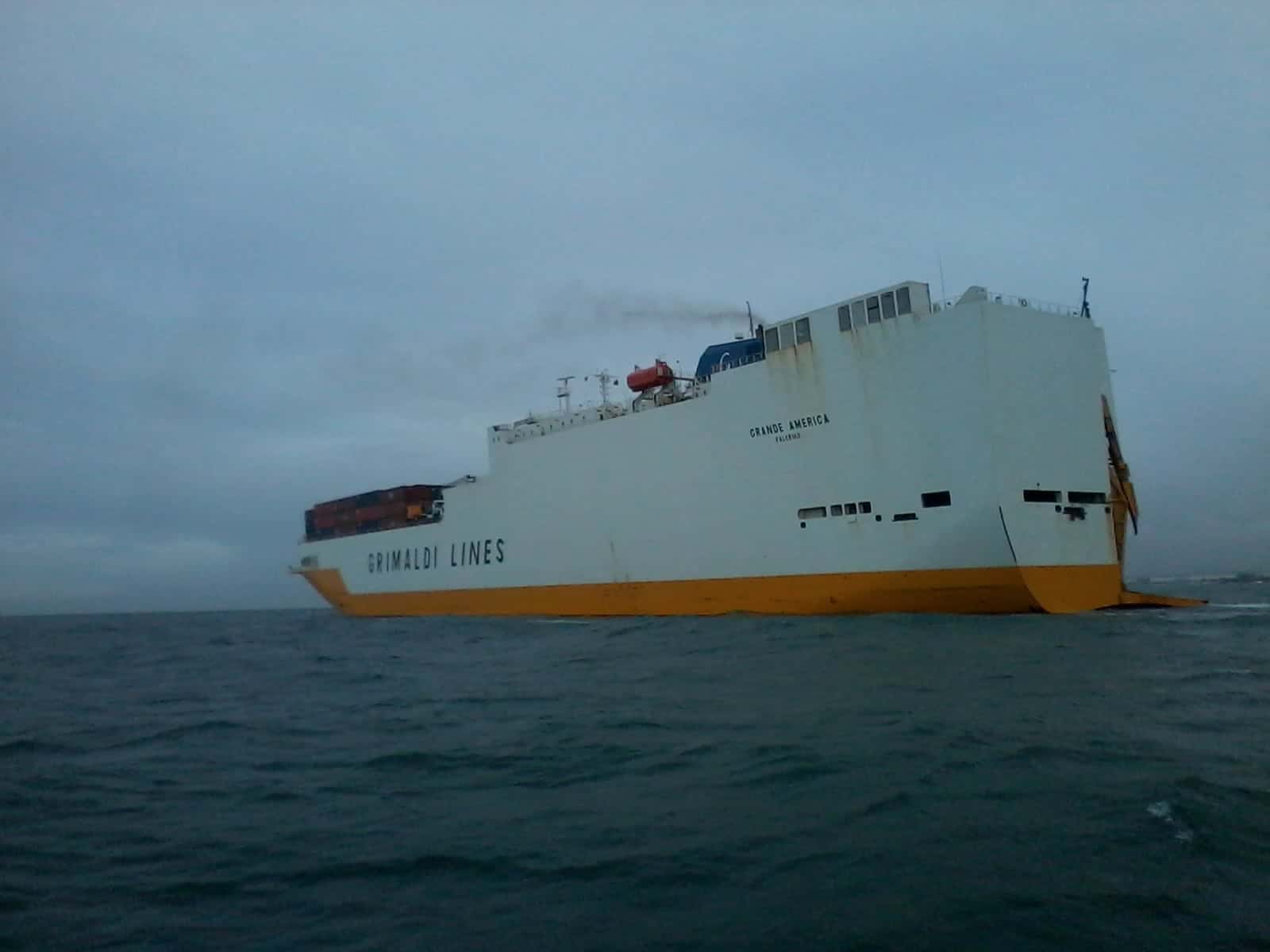
In March 2019, the Grande America vanished beneath the cold, dark waters of the Bay of Biscay , and it didn’t go quietly. It took rare cars, hazardous chemicals, and a trail of oil stretching for miles along the French coastline. Twenty-seven people barely escaped with their lives. The wreck now sits 4,600 meters below the surface. That’s nearly three miles of black, crushing ocean pressing down on a ghost ship full of secrets. What caused the fire? What exactly was burning in those containers? And why did the sea seem almost determined to swallow this ship whole? The story of this doomed vessel is stranger , and darker , than most people realize. It’s a tale of desperate sailors, lost luxury cars, toxic cargo, and a wreck that still leaks oil into the deep.
The Grande America’s Final Voyage
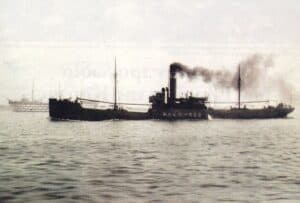
The ship left Hamburg, Germany, bound for Casablanca, Morocco. It was a routine cargo run. Nothing about it should have ended in disaster. The vessel was a roll-on/roll-off cargo ship , the kind designed to carry vehicles and containers in massive, open decks. It was built in 1997 by Fincantieri, one of Italy’s most respected shipbuilders. At 214 meters long, it was a serious piece of machinery. The ship was operated by Grimaldi Lines, a major player in European cargo shipping.
Then, on March 10, 2019, something went terribly wrong. Fire broke out somewhere in the cargo hold. The exact cause was never fully confirmed. Grimaldi Lines suggested the fire started inside one of the containers , but which one, and why, remained disturbingly vague. The ship was carrying 365 containers. Forty-five of them held hazardous materials. Ten tonnes of hydrochloric acid. Seventy tonnes of sulfuric acid. Dozens of luxury cars. When that cocktail starts burning in an enclosed steel hull, the results are catastrophic.
The crew fought the fire for hours. They couldn’t stop it. By March 11, the situation was hopeless. All 27 people on board abandoned ship. They climbed into a lifeboat and pushed off into a six-meter swell. Then the lifeboat’s engine broke down. They were adrift in the Atlantic, in the dark, with a burning ship behind them and a wall of waves around them.
The Rescue That Nearly Didn’t Happen
For more strange history, see: The Saguenay Flood of 1996: Canada’s Most Devastating 20th Century Deluge
The Royal Navy ship HMS Argyll was in the area. It responded to the distress call. But getting to the survivors wasn’t easy. The swell was brutal. Waves crashed over everything. A Royal Navy sea boat was launched to tow the broken lifeboat to safety. Leading Seaman David Groves was the coxswain of that sea boat. He navigated through six-meter waves to reach the survivors. He brought all 27 of them back alive. For his bravery, Groves was later awarded the Queen’s Gallantry Medal. It was a remarkable act of seamanship under impossible conditions.
Meanwhile, the Grande America kept burning. Nobody could stop it. The fire consumed the ship through the night. On March 12, 2019, the vessel finally gave up. It slipped beneath the surface and sank 4,600 meters to the ocean floor. The Bay of Biscay had claimed another ship.
But the danger didn’t end when the ship went under. The wreck was carrying approximately 2,200 tonnes of marine fuel. That fuel began leaking almost immediately. An oil slick formed on the surface , roughly 10 kilometers long and 1 kilometer wide. It started drifting toward the French coast. Towns like La Rochelle, Biarritz, and areas of the Vendée braced for environmental catastrophe. The images of dark oil spreading across the Atlantic were genuinely chilling.
Grande America’s Eerie Cargo of Lost Luxuries
Here’s where the story gets truly strange. Among the cargo were dozens of luxury vehicles headed for Brazil. Audis. Porsches. High-end machines worth hundreds of thousands of dollars. But four of those cars were something special , and their loss set off a bizarre chain of events.
The ship was carrying the last four units of the Porsche 911 GT2 RS ever built. The production line had officially closed in February 2019. These were the final four cars to exist. They were already sold. Customers were waiting. Then they sank to the bottom of the Atlantic Ocean, entombed in a burning wreck. Porsche made the extraordinary decision to restart the production line just to replace those four lost vehicles. It was an almost surreal response to an almost surreal disaster.
Think about what lies down there now. Rows of cars in total darkness. Sealed containers slowly corroding under three miles of ocean. Forty-five loads of hazardous chemicals slowly leaching into the deep sea. The wreck is essentially a toxic time capsule, sitting silently on the ocean floor. Remotely operated vehicles were sent down in late March 2019 to inspect the wreck. They found light oil leaks and worked to seal them. But the wreck itself? It stays where it fell. Nobody is raising it.
What Still Haunts the Deep
The vessel Island Pride, leased to the ocean survey company Ocean Infinity, located the wreck on March 30, 2019. ROVs descended to the site. They photographed and inspected the hull. They found the ship largely intact on the seabed. The ROVs sealed what leaks they could. But the full environmental impact of those 45 hazardous containers remains unknown. Nobody has fully catalogued what’s down there. Nobody knows exactly what’s seeping out.
The Bay of Biscay has a dark reputation among sailors. It’s one of Europe’s most treacherous stretches of open water. Storms build fast there. Swells arrive without warning. Dozens of ships have been lost in its depths over the centuries. The wreck now joins that grim collection.
The fire’s origin was never definitively explained. A container caught fire , but which one? Was it the acids? Was it something else entirely? The investigation pointed to the cargo area, but the specifics remain frustratingly murky. When a ship burns that completely and sinks that deep, some answers go down with it.
The Grande America now rests in permanent darkness, surrounded by corroding luxury cars and sealed containers of acid, leaking slowly into one of Europe’s most important fishing grounds. It’s a ghost ship in every sense. The crew survived. The ship did not. And the questions it left behind are still unanswered, buried under nearly three miles of cold Atlantic water.