
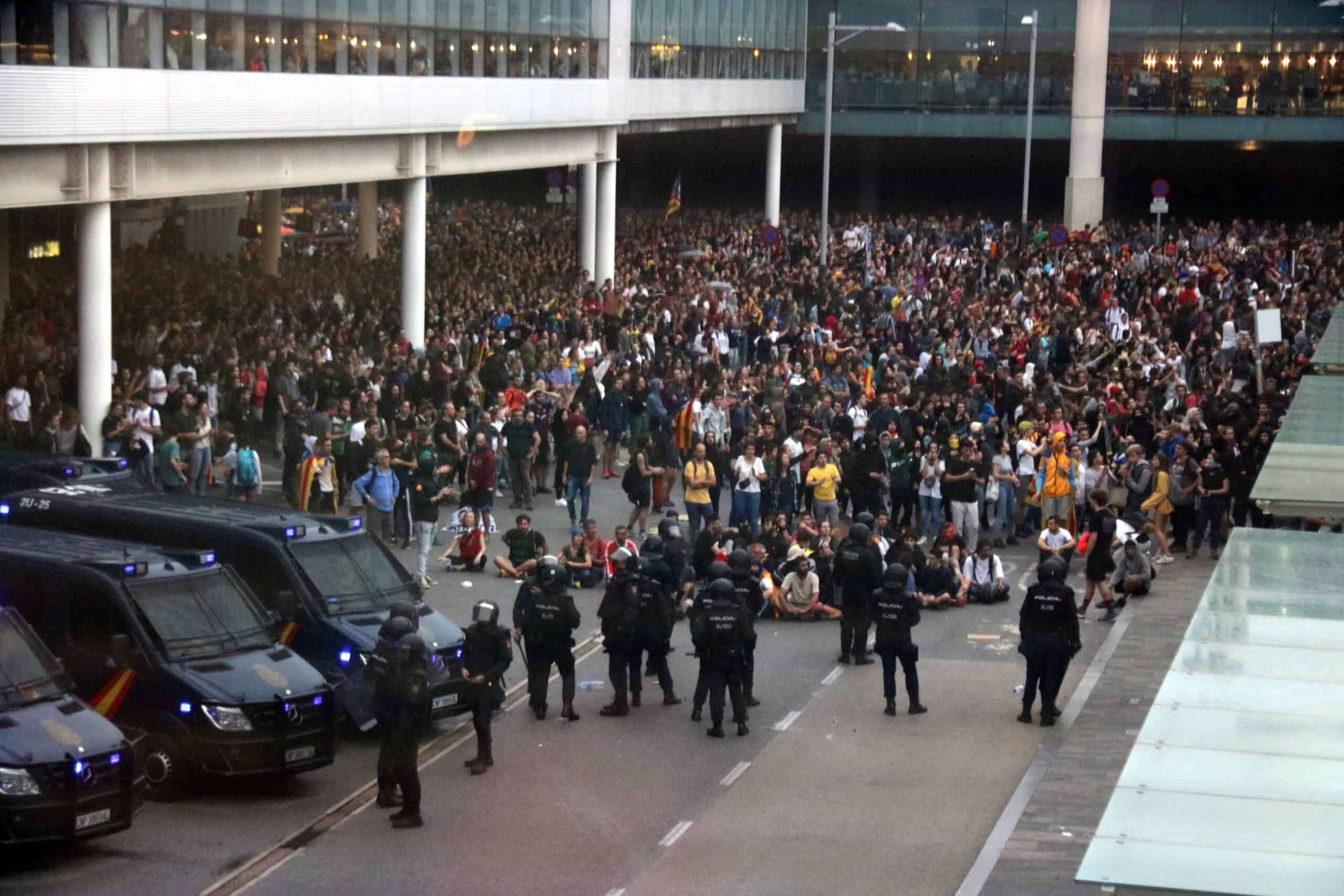
The Sherwood Syndrome is one of the most bizarre and misunderstood concepts in modern European policing. Born in the shadows of Barcelona’s streets, it carries the name of a legendary outlaw forest. It blends medieval folklore with cold, calculated crowd control strategy. Few people know the full story. Fewer still understand what it actually means. The concept was invented by David Piqué, a senior commissioner within the Mossos d’Esquadra, Catalonia’s own regional police force. Piqué developed this doctrine during a period of real social unrest. Barcelona’s streets were alive with squatters, protesters, and anti-establishment movements. The Gràcia neighborhood in particular had become a flashpoint. Something strange and unsettling was brewing beneath the city’s surface. And Piqué was watching it all very carefully.
The Sherwood Syndrome and the Ghost of Robin Hood
The name itself is deeply strange. Why name a police doctrine after a fairy tale forest? The answer lies in the legend of Robin Hood. In the old stories, Robin Hood stands at the heart of Sherwood Forest. He decides who passes freely. He decides who gets robbed. He plays judge, jury, and outlaw all at once.
Piqué borrowed this image deliberately. The Sherwood Syndrome describes a situation where certain individuals , protesters, squatters, agitators , appoint themselves as moral arbiters. They decide who deserves punishment and who doesn’t. They act outside the law. They become their own Robin Hoods, haunting the urban forest of the modern city.
The parallel is eerie. Barcelona’s Gràcia district in the 1990s and 2000s had its own shadowy ecosystem. Squatters occupied empty buildings. Anti-system groups carved out territories. The streets had their own unwritten rules. Piqué watched this underground world develop like something out of a dark folk tale.
His thesis analyzed this movement with military precision. He drew heavily from classical military theory. He studied wartime conflict strategies. He applied battlefield logic to city streets. The result was a doctrine that felt less like police policy and more like psychological warfare.
Sherwood Syndrome’s Dark Tactical Blueprint
Another fascinating historical case is: Great Reset Conspiracy Theories: When Global Recovery Plans Become Sinister Plots
Piqué’s thesis laid out a chilling tactical framework. It reads less like a police manual and more like a war strategist’s playbook. The core idea was disturbing in its cold logic.
First, the thesis warned against provoking protesters before a demonstration even begins. Arbitrary arrests before a protest, Piqué argued, would supercharge the emotional intensity of crowds. It would transform a manageable gathering into what he grimly called “a pitched battle.” The police would essentially light the fire themselves.
Second, Piqué condemned what he called the “Miyamoto Musashi model.” This refers to the legendary Japanese swordsman known for overwhelming, brutal force. In policing terms, it meant using excessive aggression to deliberately turn peaceful demonstrators violent. Piqué saw this as catastrophically counterproductive. It created martyrs. It generated sympathy for the protesters.
Third , and this is where things get truly unsettling , the thesis suggested that if protesters couldn’t be stopped from turning violent, that violence could be harnessed. Police could allow enough chaos to erupt to turn public opinion against the demonstrators. It was a calculated, almost predatory strategy. Let the crowd damn itself.
Historical policing journals from the mid-twentieth century show that this kind of psychological crowd management thinking wasn’t entirely new. But Piqué’s framework applied it with unusual specificity to Barcelona’s squatter communities.
The thesis also identified specific individuals within protest groups. Piqué called them “unbeatable” leaders. These were the figures who couldn’t be deterred through normal means. His solution was surgical. Isolate them. Arrest them. Prosecute them according to the law. Remove the head, and the movement loses its direction.
The Controversy the Sherwood Syndrome Unleashed
When Piqué’s thesis became public, the reaction was explosive. Critics immediately misread it as a blueprint for repressive policing. Headlines across Spain screamed about a secret doctrine designed to crush dissent. The name “Sherwood Syndrome” itself sounded sinister enough to fuel the panic.
The irony is almost darkly comic. Piqué’s thesis actually criticized heavy-handed police tactics. It argued against arbitrary arrests. It warned against provocation. It advocated for minimizing innocent casualties. Yet somehow, it became a symbol of police brutality in the public imagination.
This misinterpretation says something strange about the power of names. Call something the “Sherwood Syndrome” and it immediately sounds like a conspiracy. It sounds like something whispered in dark corridors. It sounds like a secret protocol passed between shadowy figures.
Piqué himself never got to fully defend his work in the court of public opinion. He died in September 2016. The controversy outlived him. His doctrine became a ghost, haunting Spanish political discourse long after its creator was gone.
The squatter movements he studied have since evolved. The Gràcia neighborhood has changed dramatically. But the debates his thesis sparked , about police power, protest rights, and the ethics of crowd control , remain very much alive.
The Legend That Won’t Die
There is something genuinely eerie about the Sherwood Syndrome’s afterlife. A police doctrine named after a mythical forest, misunderstood by nearly everyone who encountered it, authored by a man who died before he could set the record straight. It has all the ingredients of a proper mystery.
The Robin Hood parallel still resonates strangely. In the original legend, Sherwood Forest is a liminal space. It exists outside normal society. Normal rules don’t apply there. Robin Hood is both hero and outlaw, depending on who’s telling the story.
Piqué’s doctrine occupies a similar liminal space in history. Was it a thoughtful attempt to minimize police violence? Or was it a cold calculation about how to weaponize public opinion against dissidents? The Robin Hood legend itself has always carried this same ambiguity , hero to some, dangerous criminal to others.
The streets of Barcelona’s Gràcia district still hold the memory of those turbulent years. The buildings that were once squatted now house cafes and boutiques. But beneath the surface, the questions Piqué raised haven’t gone away. Who decides who deserves to pass through the forest? Who plays Robin Hood? And who gets to decide?
The Sherwood Syndrome may be the strangest footnote in modern European policing history. It’s a doctrine named after a fairy tale, born from real urban conflict, and twisted by misunderstanding into something almost mythological itself.
More strange stories
 There Is No Cabal: The Secret Internet Power Brokers Who Claimed They Didn’t Exist
 Project Azorian: The CIA’s Secret Mission to Steal a Soviet Nuclear Submarine from the Ocean Floor
 The Furtive Fallacy: History’s Darkest Obsession With Hidden Conspiracies and Secret Sins
 Silent Weapons for Quiet Wars (document): The Creepy Blueprint That Emerged from a Surplus Photocopier